This
article contains affiliate links. If you purchase through our links, we may earn a small commission at no extra
cost to you. This helps support Ready Sleek.
Going bald is one of those things most men know might happen, but aren’t prepared for when it does. Whether
you’ve noticed a receding hairline, a thinning crown, or you’re watching your shower drain with increasing anxiety —
this guide covers everything you need to know.
We’ll walk through the stages of balding, what actually causes it, your realistic treatment options, and — most
importantly — how to look absolutely great whether you fight it or embrace it.
Worried about the leap? We answer the honest question: will you regret shaving your head.
The Norwood Scale: Where Are You?
The Norwood-Hamilton Scale is the gold standard for measuring male pattern baldness. It identifies 7 stages of hair
loss, from minimal recession to full baldness. Understanding where you fall helps determine the best course of
action.
Stage 1: No Significant Hair Loss
Your hairline is where it should be. No recession, no thinning. This is the baseline — if you’re reading this article
at Stage 1, you’re probably just being proactive (smart move).
Stage 2: Slight Recession at the Temples
The hairline begins to form a subtle “M” shape. This is often called a “mature hairline” and is extremely common —
most men develop this by their late 20s. This is NOT necessarily balding. A mature hairline is a
normal part of aging and may never progress further.
Stage 3: Visible Recession (“Clinical Balding Begins”)
The recession at the temples deepens significantly, creating a pronounced “M” or “V” shape. You may also notice early
thinning at the crown (the “vertex”). This is the stage where most dermatologists would diagnose male pattern
baldness.
Action point: If you want to preserve your hair, this is the ideal time to start treatment. Earlier
intervention = better results.
Stage 4: Significant Thinning on Top
The crown area has sparse or no hair, and the recession is more severe. A band of hair still separates the front and
crown bald spots.
Stage 5: The Band Narrows
The two areas of hair loss are larger and the band separating them is thin and sparse. The classic “horseshoe”
pattern is beginning to emerge.
Stage 6: The Bridge Disappears
The connecting band is gone. You have one continuous area of baldness across the front and top of the scalp. Hair
remains on the sides and back.
Stage 7: Full Horseshoe
The most advanced stage. Only a narrow horseshoe-shaped band of hair remains around the sides and back. The hair that
remains may also be finer and thinner than before.
What Actually Causes Male Pattern Baldness?
Male pattern baldness (androgenetic alopecia) affects approximately 50% of men over 50 and up to 80% of men by age
80. Here’s what’s actually happening:
The DHT Factor
DHT (dihydrotestosterone) is the primary culprit. It’s a hormone derived from testosterone via the
enzyme 5-alpha reductase. In men genetically predisposed to hair loss, DHT binds to receptors in hair follicles,
causing them to shrink (miniaturize) over time. The follicles produce thinner, shorter hairs until they eventually
stop producing hair altogether.
Genetics
The biggest factor. Hair loss genes can come from either parent — the idea that baldness only comes from your
mother’s side is a myth. If multiple men in your family (both sides) are bald, your odds increase significantly.
Age
Hair loss can start as early as your teens but typically becomes noticeable in the late 20s to 30s. By 50, roughly
half of all men show some degree of pattern baldness.
Other Factors
- Stress: Telogen effluvium (stress-related shedding) is temporary but can accelerate existing
pattern baldness - Nutrition: Iron, zinc, and biotin deficiencies can contribute to hair thinning
- Medical conditions: Thyroid disorders, autoimmune conditions, and certain medications can cause
hair loss
Treatment Options: What Actually Works?
Not all treatments are created equal. Here’s what science actually supports:
Minoxidil (Rogaine) — Best for Early Stages
Available over-the-counter as a topical solution (2% or 5%) or foam. It works by increasing blood flow to follicles
and extending the growth phase of hair. Effective for Norwood Stages 2–4. Results take 3–6 months,
and you must use it indefinitely — stopping means losing any gained hair.
Finasteride (Propecia) — Strongest Evidence
A prescription oral medication that blocks the enzyme that converts testosterone to DHT. It reduces scalp DHT by
about 70%. The most clinically proven treatment for slowing and potentially reversing hair loss.
Side effects are uncommon but real — discuss with your doctor.
PRP (Platelet-Rich Plasma)
Your own blood is drawn, processed, and injected into the scalp. Growth factors in the plasma may stimulate dormant
follicles. Evidence is promising but still limited. Typically requires multiple sessions (every 4–6 months) and
costs $500–$2,000 per session.
Hair Transplant — Permanent Solution
FUE (Follicular Unit Extraction) or FUT (strip method) relocates hair follicles from the donor area (back/sides of
head) to the balding areas. Results are permanent and natural-looking when done well. Cost: $4,000–$15,000+
depending on the number of grafts. Best for Norwood Stages 3–5 with adequate donor hair.
What Doesn’t Work
Save your money on biotin supplements (unless you’re deficient), “volumizing” shampoos as hair loss treatments, scalp
massage devices, and most herbal remedies. They won’t reverse genetic hair loss.
The Case For Going Bald
Here’s the truth nobody in the hair loss industry wants you to hear: some men look significantly better
bald. Studies consistently show that men with shaved heads are perceived as more dominant, confident,
and physically stronger than men with thinning hair.
The worst look isn’t bald — it’s fighting a losing battle with a comb-over or desperately clinging to wispy patches.
There’s a reason the shaved head is one of the most popular looks in men’s style right now.
Ready to take the plunge? Read our guide on How to Shave Your Head Without
Clippers.
Bald Head Care: The Essential Routine
A bald head needs care — arguably more than a head full of hair. Your scalp is now fully exposed to sun, cold, and
dryness. Here’s the daily routine that keeps it looking great:
Daily Essentials
- Cleanse: Wash with a gentle, sulfate-free cleanser (not regular soap — it’s too harsh)
- Moisturize: Apply a lightweight, mattifying moisturizer to prevent shine and dryness
- SPF: Non-negotiable. Apply SPF 30+ broad-spectrum sunscreen every single day. Your scalp will
burn faster than any other body part
Weekly Maintenance
- Exfoliate: 1–3 times per week to prevent ingrown hairs and dead skin buildup
- Shave: Every 2–3 days for a clean look, or weekly if you prefer a shadow
- Inspect: Check for moles, sun spots, or changes — your scalp is now exposed and dermatologist
checkups become more important
Style Tips for Bald Men
Going bald opens up style opportunities that men with hair don’t have. Here’s how to maximize your look:
Grow a Beard
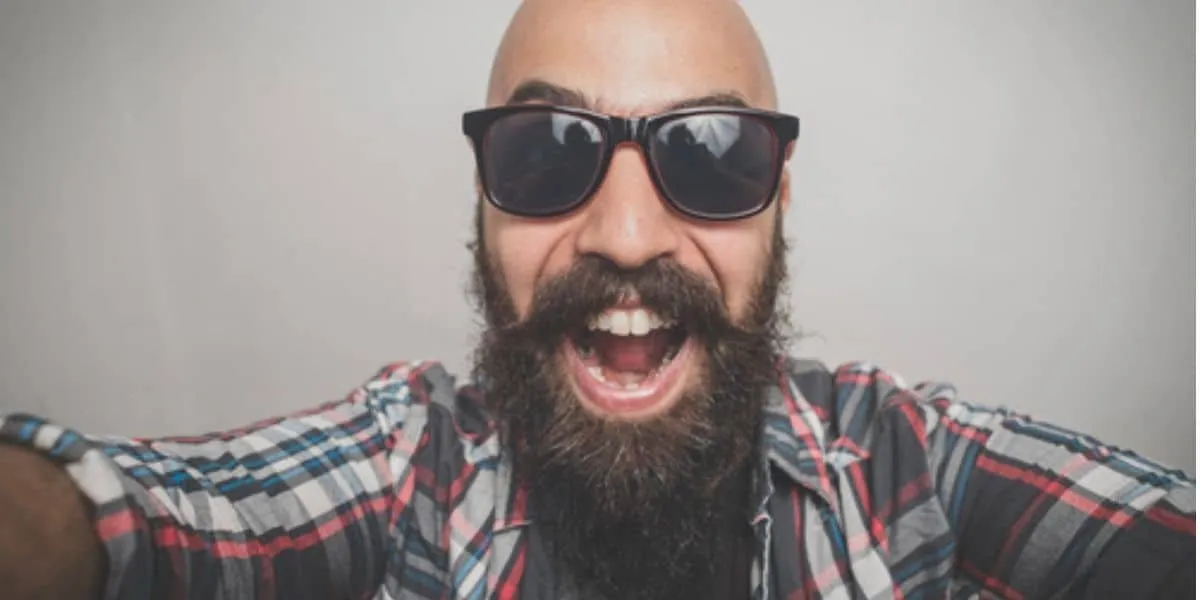
The shaved head with beard combination is arguably the most masculine look in
men’s grooming. It creates visual balance — what you lose on top, you gain on the jawline. Even if you can’t grow a full beard, stubble works brilliantly with a bald head.
Dress Sharp
Bald men who dress well look exceptional. The clean scalp creates a streamlined appearance that pairs perfectly with
sharp tailoring. Check out our guide on bald men in suits for inspiration.
Own Your Glasses
If you wear glasses, they become a key style accessory on a bald head. Bold frames add character and create a
distinguished look. Read our shaved head with glasses guide.
Headwear
Hats, beanies, and yes — even headbands and trucker hats work on bald men. They add personality and protect
your scalp from sun exposure.
Face Shape Matters
Not all head shapes are created equal when it comes to rocking a bald look. Oval
and square head shapes tend to look best, but every shape can work with the right styling choices. Men with round faces should focus on angular clothing and facial hair to add structure.
Going Bald Young: Special Considerations
Losing your hair at 25 or 30 hits differently than at 50.
The psychological impact is real — it affects confidence, dating, and self-image. Here’s what helps:
- Take action early: Either start treatment or commit to buzzing/shaving. The limbo of “should I
or shouldn’t I” is worse than either option - Talk to someone: A surprising number of young men struggle with hair loss in silence. It’s more
common than you think - Remember: Women consistently rate confidence as more attractive than hair. How you
carry yourself matters far more than what’s on top of your head - Consider the evidence: Jason Statham, The Rock, Bruce Willis, Jeff Bezos — the list of
successful, attractive bald men is endless
The “In-Between” Styles
Not ready to shave completely? These hairstyles work with thinning hair:
- Buzz Cut: A #1 or #2 guard buzz minimizes the contrast between thinning areas and full hair
- French Crop: Forward-styled fringe that softens a receding hairline
- Textured Crop: Short, choppy layers that break up the hairline
- Caesar Cut: Short and uniform with a blunt fringe that covers mild recession
- Crew Cut: Classic, short on sides, slightly longer on top — timeless for a reason
If you still have some hair, check out how to manage long hair while going
bald and our guide to styling when bald on top with hair on the
sides.
🏆 Essential Bald Head Care Products
- Philips Norelco Multigroom 9000 — Best trimmer for buzz
cuts and head shaving prep - Philips OneBlade 360 — Quick scalp maintenance between
shaves - Honest Amish Beard Oil — For the bald + beard combo
Frequently Asked Questions
At what age do most men go bald?
Hair loss can start as early as the late teens, but most men first notice it between 25 and 35. By age 50,
approximately 50% of men show visible hair loss. By 80, up to 80% of men experience some degree of male pattern
baldness.
Can you stop balding once it starts?
You can significantly slow it down with minoxidil and finasteride, especially if started early (Norwood Stage 2–3).
Complete reversal is rare, but maintaining most of your hair is realistic with consistent treatment. A hair
transplant offers a permanent solution for more advanced stages.
Is balding from your mom or dad?
Both. The most significant hair loss gene (AR gene) is on the X chromosome (inherited from your mother), but many
other genes from both parents influence hair loss. Having a bald father increases your risk, regardless of your
mother’s side.
Should I just shave my head if I’m balding?
It depends on the stage. At Norwood 2–3, you have treatment options. At Norwood 5+, shaving usually looks
significantly better than holding on. The decision is personal, but most men who finally shave say they wish they’d
done it sooner.
Does wearing hats cause balding?
No. This is a persistent myth. Wearing hats does not cause hair loss or accelerate balding. Hat friction can cause
temporary breakage in existing hair, but it doesn’t affect the follicle or cause permanent loss.
Written &
Fact-Checked By
The Ready Sleek Team
Evidence-based grooming advice since 2019. No sponsored
endorsements.
Related Articles
- Best DHT Blocker Shampoos for Men (2025): Do They Actually Work?
- Best Scalp Moisturizers for Bald Men in 2025: Stop the Dry, Flaky Look
- Best Shampoo for Men in 2025: For Every Hair Type and Concern
- Does Wearing a Hat Cause Hair Loss? The Myth Debunked
- Does Creatine Cause Hair Loss? What the Science Actually Says

Axel Lander is the founder and editor of ReadySleek. He publishes practical guides on men’s style, grooming, and fragrance, with a focus on clear comparisons, value, and the trade-offs readers should know before deciding.