A buzz cut can be a practical choice with a receding hairline, but there is no single best guard number and no guarantee that shorter hair will conceal thinning. The useful question is how much scalp you are comfortable showing and how much styling flexibility you want to keep.
If you are unsure, ask your barber to leave more length on the first pass and review the result before going shorter. You can remove more hair during the appointment; you cannot put it back. This guide separates that haircut decision from questions about hair loss.
Buzz Cut Length Chart: Choose By Your Priorities
Use this as a starting-point discussion, not a prescription based on a Norwood stage. Recession, density, hair texture, contrast and personal preference do not translate into one compulsory haircut.
| Your priority | Length to discuss | Trade-off to check |
|---|---|---|
| Keep some coverage and flexibility | #3–#4, roughly 10–13 mm, or longer | A longer starting point leaves room to shorten. It may stand up or separate rather than lie flat. |
| A short, simple all-over cut | #2, roughly 6 mm | Less hair to arrange, but the hairline and scalp may be more exposed. |
| An intentionally very short finish | #1, roughly 3 mm | Choose it because you like the look, not because it promises to hide sparse areas. |
| Keep a front section you can arrange | A crew cut with the top specified separately | Agree on top length and direction as well as the sides. A fade alone does not specify the haircut. |
| Considering a no-guard cut or shave | Confirm the clipper’s actual blade setting | No guard is not universally 0 mm, and a clipper cut is not the same as a razor shave. |
These are rounded examples from Wahl’s guide-comb chart. Check the millimetres marked on your compatible attachment and the clipper instructions; guard labels and lever settings matter.
What A Buzz Cut Can And Cannot Change
A shorter cut changes the outline and the contrast between hair and visible scalp. You might prefer that more uniform appearance. You might instead find that it exposes areas you would rather keep covered. Neither result is a failure, and there is no obligation to shave as your hairline changes.
A high hairline, an M-shaped outline or a widow’s peak in a photograph does not establish a diagnosis or show how someone’s hair is changing. Likewise, a beard is an optional styling choice, not a requirement for making a buzz cut work.
Four Styles To Discuss With Your Barber
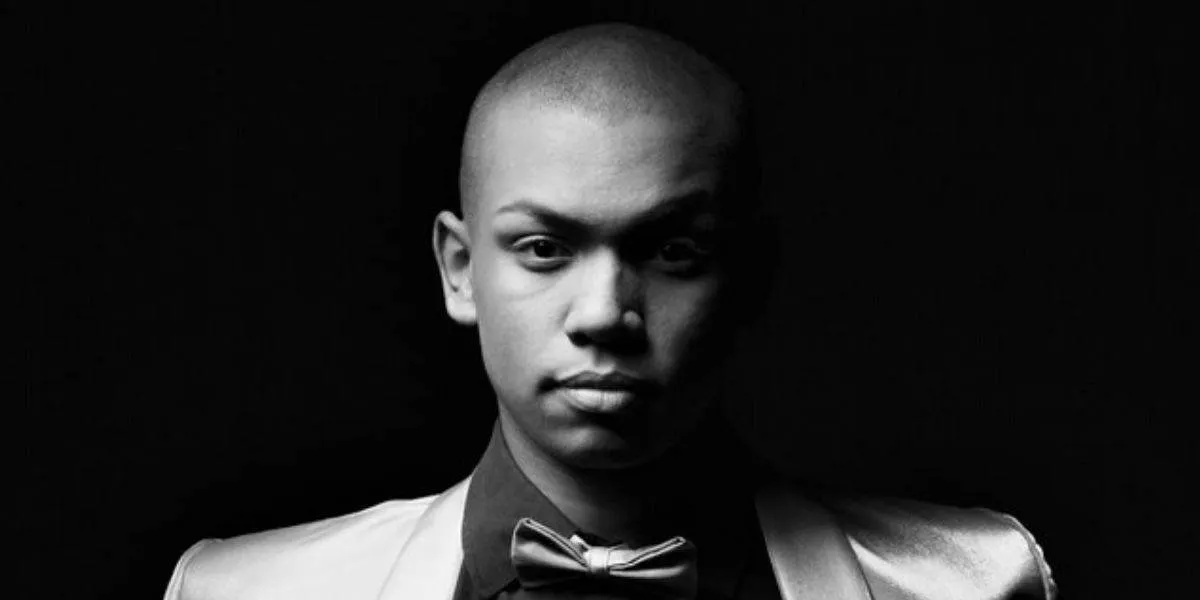
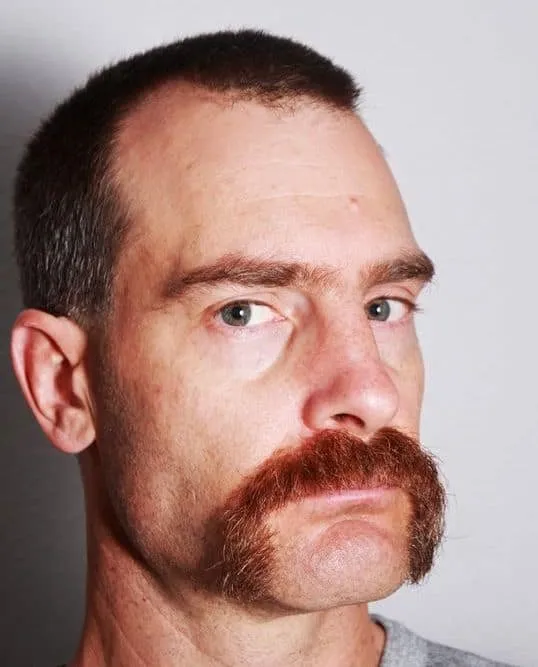
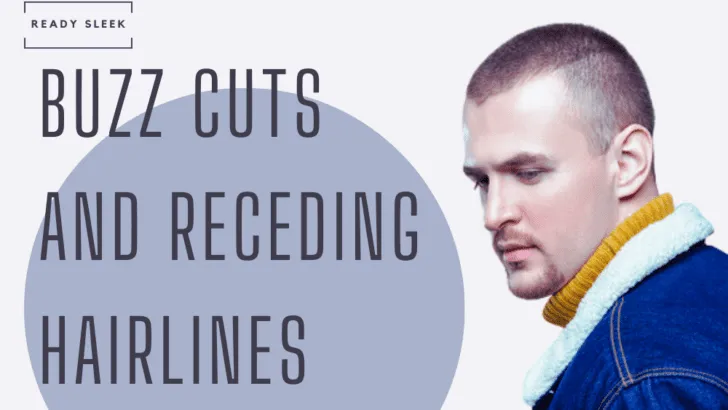
The stock photographs below illustrate shapes. We have not measured their guard settings or documented the models’ hair-loss histories.
1. A Short All-Over Cut


Ask for one agreed length across the top, sides and back if your priority is simplicity. An all-over buzz does not have to mean removing the guard. Start with enough length to judge the outline and scalp visibility in a mirror before making another pass.
2. A Short Top With Faded Sides


Separate two decisions: the length on top and how high the shorter sides extend. Ask the barber to show where the fade would finish. Taking the sides higher changes the silhouette; it does not reliably erase a receding temple or conceal crown thinning.
3. A Crew Cut With More Length On Top


If you want some ability to arrange the front, discuss a longer top rather than choosing a guard for the whole head. Ask what the cut will look like without product, too. Texture and growth direction affect whether the front stands up, lies forward or parts.
4. A Short Cut That Leaves The Hairline Visible


You do not have to disguise the outline of your hairline. If you like this kind of short shape, use the picture to discuss the overall finish. Do not use it to infer a hair-loss stage or assume an identical result on a different head of hair.
Before And After: What The Comparison Actually Shows


The right-hand image shows much shorter sides, a more defined part and different beard shaping. Several things changed together, so it cannot tell you what one guard change would do. The top remains longer than an all-over buzz.
When saving your own reference photos, use similar light, angle and dry-hair conditions. Compare the front, temples and crown separately. This is a way to judge a haircut you prefer, not to diagnose hair loss from pictures.
A Barber Brief You Can Actually Use
- Starting length: “Leave enough on top that we can review it before going shorter.” Agree on the attachment or measured length.
- Sides: specify all-over length, taper or fade; show where any fade should stop.
- Hairline: explain whether you want the natural outline left alone rather than automatically adding a sharp line-up.
- Check before finishing: look at the crown and both sides with a second mirror, not just the front.
- Next-cut record: write down the top, sides, lever setting if relevant, date and the one thing you would change next time.
That record is more useful than “shorter next time.” For example: “Keep the top the same; make the side transition lower.” Change one main variable at a time if you want to learn what you prefer.
Keep Haircut Choices Separate From Hair-Loss Treatment
A haircut does not treat hair loss. If you are concerned about thinning, seek a qualified dermatologist’s assessment rather than choosing treatment from a haircut chart. The cause matters, and treatment suitability and results vary. The American Academy of Dermatology’s diagnosis and treatment guide also warns that microneedling can worsen some conditions. Do not start medication or scalp needling because you chose a buzz cut.
Maintenance And Growing It Out
Book the next tidy-up around the finish you want to maintain, not a universal schedule. Note when the sides begin to feel too bulky or the outline stops looking the way you want. If you are growing the top out, make that clear so a routine trim does not remove the length you are trying to keep.
Exposed scalp needs sun protection, not a deliberate tan. Use shade, a protective hat and broad-spectrum, water-resistant SPF 30 or higher on uncovered skin, following the product directions. See the AAD’s sunscreen guidance.
Common Questions
Does A Buzz Cut Hide A Receding Hairline?
Not reliably. It may give you an outline you prefer, but it leaves the hairline visible and can reveal more scalp. Judge a conservative first cut before deciding to go shorter.
Is #1 Better Than #2 For Thinning Hair?
Neither is universally better. #1 is shorter on the example guard system above. That describes length, not a guaranteed improvement in coverage or appearance.
Do I Need To Buy New Clippers First?
Not necessarily. A barber visit can establish a useful starting length before you buy equipment. If you already own clippers, check attachment compatibility and their instructions. No particular clipper is required to make this styling decision.
For the broader length choice, see how to choose a buzz cut length and our longer buzz-cut comparison.
Editorial note: Revised with AI assistance using the sources linked above. No clinical review or controlled haircut trial was performed for this update. Stock images are style references, not evidence of tested outcomes. See how we evaluate recommendations.

Axel Lander is the founder and editor of ReadySleek. He publishes practical guides on men’s style, grooming, and fragrance, with a focus on clear comparisons, value, and the trade-offs readers should know before deciding.