
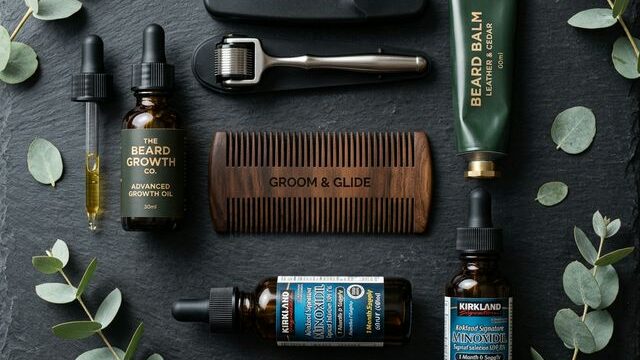
Most “beard growth kits” are grooming bundles, not proven treatments. Oils and balms can make existing beard hair feel softer and look neater, but they cannot create new follicles. Supplements only address a growth problem when a real deficiency is involved. Products that add minoxidil or microneedling move beyond ordinary grooming—and should not be treated like a routine Amazon bundle.
This page previously recommended a do-it-yourself combination of 5% minoxidil and a dermaroller for facial use. We removed that recommendation. Current US minoxidil labeling directs the product to the scalp and says not to apply it to other parts of the body. The FDA also says it has not cleared microneedling devices for hair loss or for use together with topical products.
What a Beard Growth Kit Can—and Cannot—Do
| Common component | Reasonable expectation | What the bundle does not prove |
|---|---|---|
| Beard oil or balm | Conditions existing hair and the skin beneath it; may reduce a dry or rough feel | That new follicles will form or sparse areas will fill in |
| Brush or comb | Helps distribute product and arrange existing hair | That brushing changes the number or diameter of follicles |
| Vitamin or biotin supplement | May help only when a relevant deficiency is diagnosed and corrected | That extra vitamins increase beard growth in a person without a deficiency |
| Topical minoxidil | An FDA-approved active ingredient for specific patterns of scalp hair loss when used as labeled | That an over-the-counter scalp product is approved for beard use |
| Microneedling roller | Some devices have authorized cosmetic uses for certain scars and wrinkles when used appropriately | That a home roller is cleared for hair growth or for carrying another product into facial skin |
The Two Claims That Need the Most Caution
Minoxidil Is Not Labeled as a Beard Product
The current DailyMed label for 5% minoxidil foam describes a scalp hair-regrowth treatment. Its directions limit application to the scalp, and its warnings say not to apply it to other parts of the body. The label also tells users to stop and ask a doctor about symptoms such as chest pain, rapid heartbeat, faintness, dizziness, swelling, or persistent irritation.
The American Academy of Dermatology advises speaking with a dermatologist before trying minoxidil for facial hair and notes that raw, irritated facial skin is a common problem reported with this off-label use. That is a clinical decision, not a component we can responsibly rank inside a general grooming kit.
Microneedling Is Not a Harmless Add-On
The FDA’s microneedling guidance says no microneedling medical devices have been authorized for over-the-counter sale. It also says no device has been cleared for hair loss or for use with another product. Potential problems include infection, bleeding, skin-color changes, and damage when devices are misused or shared.
For that reason, we do not recommend a needle length, schedule, or minoxidil-plus-roller routine. Those instructions would turn a grooming article into unsupervised medical guidance without a proper examination.
A More Useful Way to Choose
- Decide whether the goal is cosmetic or medical. If you simply want a tidier-looking beard, a basic oil, balm, brush, and careful trim can help the hair you already have.
- Skip “growth” pricing without a clear ingredient list. A branded bundle is not evidence that its ingredients change follicle growth.
- Do not self-diagnose sudden or patchy loss. A dermatologist can distinguish normal density from a skin condition or another cause that needs assessment.
- Discuss drug or device use with a qualified clinician. Bring the exact product label and a list of medicines or conditions rather than relying on before-and-after photos.
Our Current Verdict
We cannot name an evidence-based “best beard growth kit.” For ordinary grooming, buy simple conditioning and styling products based on ingredients, scent, and price—not promises of new growth. If the concern is genuinely sparse, changing, or patchy facial hair, a dermatologist is the appropriate next step.
Sources and product labeling checked September 3, 2026. This article is general information and is not personal medical advice.

Axel Lander is the founder and editor of ReadySleek. He publishes practical guides on men’s style, grooming, and fragrance, with a focus on clear comparisons, value, and the trade-offs readers should know before deciding.