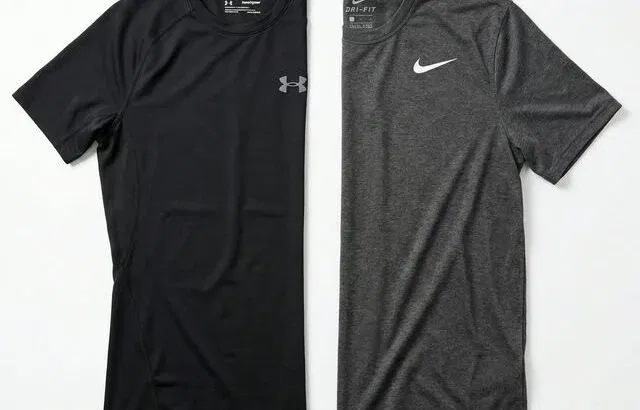
Under Armour and Nike are two of the biggest athletic brands in the world — but they occupy different spaces. Nike is the undisputed king of sports marketing and fashion, while Under Armour has carved out a niche as the performance-first brand. Here’s how they stack up for men.
The Short Answer
Nike dominates fashion, cultural relevance, and lifestyle appeal — the brand you wear on and off the field. Under Armour excels at pure athletic performance — moisture-wicking base layers, compression gear, and functional training apparel. Choose Nike for style versatility; Under Armour for gym performance.
Complete Comparison
| Feature | Under Armour | Nike |
|---|---|---|
| Founded | 1996 (Baltimore) | 1964 (Oregon) |
| Revenue | ~$5.7 billion | ~$51 billion |
| Strongest Category | Base layers, compression, training | Running, lifestyle, basketball |
| Key Technology | HeatGear, ColdGear, HOVR, Charged | Dri-FIT, ZoomX, Air, ReactX |
| Avg. Training Shoe Price | $80–$130 | $90–$160 |
| Avg. T-Shirt Price | $25–$45 | $30–$55 |
| Fit | Compression-focused, fitted | Standard to athletic fit |
| Fashion Appeal | Minimal (gym-focused) | Very high (streetwear crossover) |
| Best For | Gym, training, base layers | Running, lifestyle, everyday |
| Celebrity Athletes | Steph Curry, Tom Brady | LeBron, Ronaldo, Serena |
Performance Apparel
Under Armour revolutionized performance base layers. Their HeatGear (for hot weather) and ColdGear (for cold weather) compression shirts remain the gold standard for athletic base layers. The fabric technology genuinely wicks sweat better and keeps you cooler/warmer than most competitors.
Nike’s Dri-FIT is excellent and more widely available, but Under Armour’s compression technology has a slight edge in pure moisture management for intense workouts. Where Nike wins is in the breadth and style of their athletic apparel — Nike apparel transitions from gym to street seamlessly.
Footwear
Nike dominates footwear with decades of innovation and iconic designs. From the Air Max to the Pegasus to the ZoomX Vaporfly, Nike makes the best running shoes and the most culturally relevant sneakers.
Under Armour’s HOVR line is solid for gym training and short runs, and their Charged line provides good cushioning for the price. But they can’t compete with Nike’s depth of innovation or style appeal in footwear.
Which Should You Choose?
Choose Under Armour if:
- You need the best compression and base layer technology
- You primarily work out in the gym
- You want performance gear at slightly lower prices
- You don’t need your athletic wear to double as streetwear
Choose Nike if:
- You want athletic wear that looks great everywhere
- You need premium running shoes
- You value fashion-forward athletic design
- You want the widest product range and innovation
Frequently Asked Questions
Is Under Armour as good as Nike?
For base layers and compression gear, Under Armour is arguably better. For running shoes, lifestyle sneakers, and overall product range, Nike is significantly ahead. Both offer excellent athletic apparel quality, but Nike justifies premium prices with superior design and more advanced shoe technology.
Why is Under Armour cheaper than Nike?
Under Armour spends less on marketing, celebrity endorsements, and fashion collaborations. Their products are genuinely well-made but don’t carry the same brand premium as Nike. This makes them excellent value for pure athletic use.
Related Articles
- Matte vs Glossy Hair Products: Which Finish Is Right for You?
- Beard Moisturizer vs Beard Oil: What’s the Difference and Which Do You Need?
- Tumi vs Samsonite: Which Luggage Brand Is Better?
- Eau de Toilette vs Eau de Parfum: What’s the Actual Difference?
- FUE vs FUT Hair Transplant: Which Method Is Right for You?

Axel is the founder of ReadySleek and has spent over 5 years researching and testing men’s grooming products, skincare routines, and hair loss treatments. His work combines hands-on product testing with insights from dermatologists and trichologists to deliver evidence-based grooming advice.
He specializes in men’s skincare (including ingredient analysis of retinol, niacinamide, and SPF), hair loss science (minoxidil, finasteride, hair transplants), men’s fragrance (with 80+ colognes personally tested), and body grooming techniques.
When he’s not reviewing the latest grooming products, Axel focuses on making complex grooming topics accessible and actionable for everyday guys.