
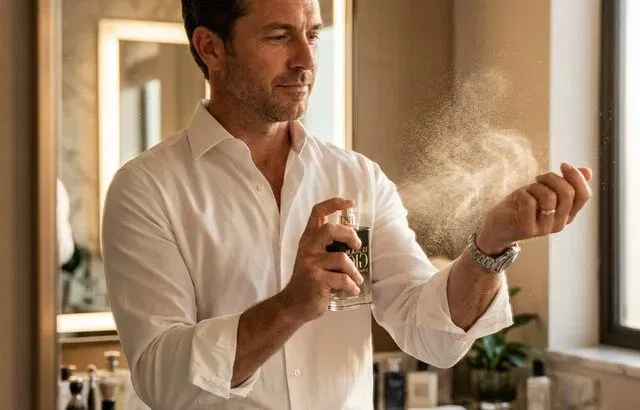
You’ll see “EDT,” “EDP,” “Parfum,” and “Cologne” on almost every fragrance bottle – and most men have no idea what they mean. These aren’t just marketing labels. They indicate the concentration of fragrance oils, which directly affects how strong the scent is, how long cologne lasts, and how much you should apply.
Here’s the complete breakdown.
The Fragrance Concentration Scale
| Concentration | Oil % | Longevity | Projection | Price | Best For |
|---|---|---|---|---|---|
| Eau de Cologne (EDC) | 2–4% | 2–3 hours | Light | $ | Refreshing splash |
| Eau de Toilette (EDT) | 5–15% | 4–6 hours | Moderate | $$ | Daily wear, summer |
| Eau de Parfum (EDP) | 15–20% | 6–10 hours | Strong | $$$ | Evening, special occasions |
| Parfum / Extrait | 20–40% | 10–14+ hours | Intimate | $$$$ | Signature scent |
Eau de Toilette (EDT) Explained
EDT is the most common concentration for men’s fragrances and what most people think of as “cologne.” At 5–15% fragrance oil, EDTs are light enough for daily wear but strong enough to be noticed.
Characteristics:
- Longevity: 4–6 hours typically
- Projection: Moderate – noticeable within arm’s length
- Best season: Spring and summer (lighter formulations breathe in heat)
- Application: 3–4 sprays for adequate presence
- Price: Most affordable of the common concentrations
Top EDTs: Bleu de Chanel EDT, Dior Sauvage EDT, Versace Dylan Blue
Eau de Parfum (EDP) Explained
EDP has become increasingly popular as men want longer-lasting fragrances. The higher oil concentration means the scent evolves more slowly, revealing deeper base notes over longer wear.
Characteristics:
- Longevity: 6–10 hours typically
- Projection: Strong for first 2–4 hours, then settles closer to skin
- Best season: Fall and winter (richer notes pair with cooler temperatures)
- Application: 2–3 sprays is usually sufficient
- Price: 20–40% more expensive than EDT versions
Top EDPs: Dior Sauvage EDP, YSL Y EDP, Versace Eros EDP
EDT vs EDP: Key Differences
| EDT | EDP | |
|---|---|---|
| Longevity | 4–6 hours | 6–10 hours |
| Projection | Moderate throughout | Strong early, intimate later |
| Scent profile | Brighter top notes, lighter overall | Richer, deeper, more complex |
| Reapplication | Often needed mid-day | Usually lasts all day |
| Best for | Office, daily wear, summer | Special occasions, dates, winter |
| Price | More affordable | 20–40% higher |
| Sprays needed | 3–4 | 2–3 |
Same Fragrance, Different Concentration: Do They Smell Different?
Yes, often significantly. When a brand releases EDT and EDP versions of the same fragrance, they don’t just increase the oil concentration – they frequently reformulate the scent profile. Typical changes:
- EDP versions are usually warmer and sweeter – More amber, vanilla, or woody notes in the base
- EDT versions are usually lighter and fresher – More citrus and aromatic notes, lighter dry-down
- The opening may be similar, the dry-down different
Example: Dior Sauvage EDT is fresh and peppery. Dior Sauvage EDP is smoother and more amber-focused. Same name, different wearing experience. This is why testing before buying matters.
Which Should You Buy?
Choose EDT if: You want a lighter daily fragrance, you live in a hot climate, you prefer subtle projection, you prioritize value, or you’re buying your first cologne.
Choose EDP if: You want all-day longevity, you’re buying for evening/special occasions, you prefer richer scent profiles, or you want fewer sprays to last longer (which can offset the higher price).
Pro tip: If you can only own one version, EDP offers more versatility year-round. Just use fewer sprays in summer. For our top picks across all concentrations, see: Best Colognes for Men.
Common EDT vs EDP Myths
EDP is not always better than EDT
EDP usually gives you more depth and longevity, but that does not automatically make it the better buy. EDT can be brighter, easier to wear in warm weather, and better for office or daytime use when heavy projection would feel too much.
EDT is not just watered-down EDP
Many brands reformulate the EDT and EDP versions instead of simply changing the oil concentration. The EDT may emphasize fresher top notes, while the EDP may lean warmer, sweeter, or more resinous. Always sample both if you care about the exact scent profile.
Owning both can make sense
If you love a fragrance line, owning the EDT and EDP can be practical rather than redundant: use the EDT for casual daytime wear and the EDP for evenings, colder weather, or occasions where you want more lasting power.
For a broader wardrobe approach, compare this with our fragrance guide hub, fragrance notes guide, and cologne layering guide.
Frequently Asked Questions
Is “cologne” the same as EDT?
In common usage, “cologne” refers to any men’s fragrance. Technically, Eau de Cologne (EDC) is its own concentration – the lightest at 2–4% oil. When people say “cologne,” they usually mean their EDT or EDP. The industry uses “cologne” and “fragrance” interchangeably for men’s products regardless of concentration.
Does EDP always last longer than EDT?
Usually, but not always. Some EDTs with synthetic molecules like Ambroxan can outlast some EDPs with natural ingredients. Skin chemistry also plays a role – dry skin absorbs fragrance faster, reducing longevity. Tip: applying to moisturized skin extends any fragrance’s lifespan. For our top long-lasting picks, see: Best Long-Lasting Colognes.
Is EDP worth the extra cost?
Often yes, when you factor in usage. An EDP requires fewer sprays per application and lasts longer, so a bottle may last nearly as long as the cheaper EDT version. The cost-per-wear difference is usually smaller than the sticker price difference suggests.

Axel is the founder of ReadySleek and has spent over 5 years researching and testing men’s grooming products, skincare routines, and hair loss treatments. His work combines hands-on product testing with insights from dermatologists and trichologists to deliver evidence-based grooming advice.
He specializes in men’s skincare (including ingredient analysis of retinol, niacinamide, and SPF), hair loss science (minoxidil, finasteride, hair transplants), men’s fragrance (with 80+ colognes personally tested), and body grooming techniques.
When he’s not reviewing the latest grooming products, Axel focuses on making complex grooming topics accessible and actionable for everyday guys.


