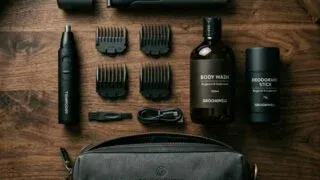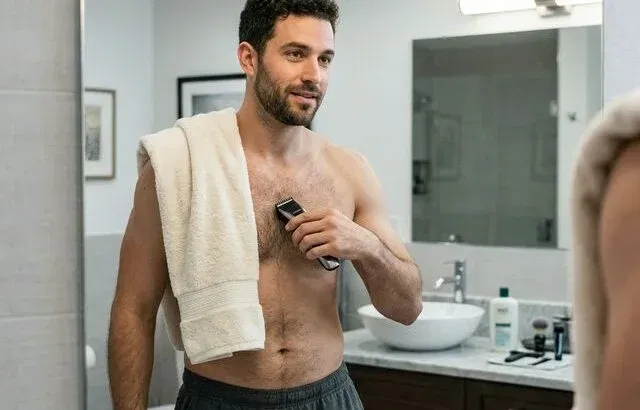
Nothing ruins a clean grooming session faster than red bumps, razor burn, and itchy regrowth. The difference between smooth results and painful irritation comes down to technique, tools, and aftercare. Here’s how to trim every body zone properly — chest, stomach, arms, legs, and below the belt — without the aftermath.
Rule #1: Trim, Don’t Shave
For most body areas, trimming to 3-6mm is better than shaving to skin level. Here’s why: trimming leaves hair above the skin surface, so it can’t become ingrown. There’s no razor burn because no blade touches skin. Regrowth is softer (tapered ends vs blunt cuts). It looks natural — completely smooth body hair removal looks unnatural on most men. The exception: back and shoulders, where most men prefer fully smooth.
Trimming Guide by Body Zone
| Zone | Recommended Length | Direction | Guard Setting | Difficulty |
|---|---|---|---|---|
| Chest | 3-6mm (trim, don’t shave) | Downward (with grain) | #1-2 | Easy |
| Stomach | 3-6mm | Downward | #1-2 | Easy |
| Arms | 6-10mm (just thin it out) | Against grain works fine | #2-3 | Easy |
| Legs | 6-10mm | Against grain | #2-3 | Easy |
| Underarms | 3-5mm | Multiple directions (spiral growth) | #1 | Easy |
| Below belt | 3-6mm | With grain, pull skin taut | #1-2 | Medium |
| Back/shoulders | Smooth (no guard) | Downward | None | Hard (need help) |
Pre-Trim Preparation
Shower first with warm water for 5-10 minutes. This softens hair, opens pores, and makes the trimmer glide more smoothly. Exfoliate the night before (not the same day) with a body scrub. This removes dead skin cells that can trap regrowing hairs and cause ingrowns. Dry your skin before trimming if using a non-waterproof trimmer. Wet hair clumps and clogs blades. If your trimmer is waterproof, trimming in the shower works great. Trim long hair with scissors first if it’s been a while. Going straight in with a trimmer on long hair causes uncomfortable pulling.
Trimming Technique (Prevent Irritation)
Start with the longest guard and go shorter gradually. You can always take more off. Use light, even pressure. Let the trimmer do the work. Pressing hard doesn’t cut closer — it causes uneven results and skin irritation. Keep the trimmer flat against your skin at a slight angle. Tilting causes nicks and uneven cutting. Go with the grain first. For a closer trim, make a second pass against the grain — but only on less sensitive areas (chest, legs). For below the belt, always stay with the grain. Pull skin taut in wrinkled areas (scrotum, underarms). Loose skin catches in the blade and causes cuts.
Aftercare (The Part Most Guys Skip)
Immediately after: Rinse with cool water (closes pores). Pat dry — don’t rub. Apply an alcohol-free, fragrance-free moisturizer or aloe vera gel. 24 hours after: Avoid tight clothing over freshly trimmed areas. No swimming, hot tubs, or saunas. Avoid deodorant on freshly trimmed underarms — use after 24 hours. 48-72 hours after: Gently exfoliate with a body wash containing salicylic acid to prevent ingrown hairs as hair starts regrowing. Continue moisturizing daily. Ongoing: Maintain a regular trimming schedule (weekly or bi-weekly). Consistent trimming means less irritation each time because hair stays short.
Frequently Asked Questions
Why does trimming cause itching?
Itching after trimming is caused by sharp, freshly-cut hair tips poking the skin as they regrow. Using a guard (not guardless) reduces itching significantly because the tips are cut further from the skin. Moisturizing daily and exfoliating every 2-3 days also minimizes itching. The more regularly you trim, the less itching you’ll experience.
How often should men trim body hair?
Every 7-14 days for maintenance once you’ve reached your preferred length. Chest and stomach hair grows approximately 0.3-0.5mm per day, so weekly trimming keeps things consistently groomed. Below the belt, weekly is ideal. Back hair grows slower and can be done every 2 weeks.
Related Articles
- Best Body Groomers for Men
- Best Manscaping Kit
- Best Pubic Hair Trimmers
- Back Hair Removal Guide
- How to Shave Your Back Yourself

Axel is the founder of ReadySleek and has spent over 5 years researching and testing men’s grooming products, skincare routines, and hair loss treatments. His work combines hands-on product testing with insights from dermatologists and trichologists to deliver evidence-based grooming advice.
He specializes in men’s skincare (including ingredient analysis of retinol, niacinamide, and SPF), hair loss science (minoxidil, finasteride, hair transplants), men’s fragrance (with 80+ colognes personally tested), and body grooming techniques.
When he’s not reviewing the latest grooming products, Axel focuses on making complex grooming topics accessible and actionable for everyday guys.