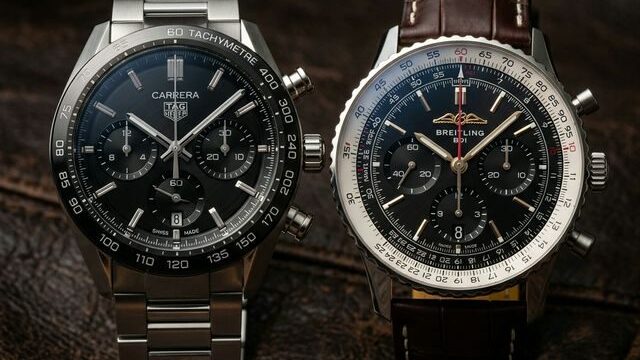
TAG Heuer and Breitling are two of the most iconic Swiss watch brands for men who love sports chronographs. Both have deep motorsport and aviation heritage, both sit in the $2,000–$10,000 range, and both are owned by luxury conglomerates. Here’s how they compare.
The Short Answer
TAG Heuer is the motorsport chronograph brand — linked to Formula 1, Steve McQueen, and accessible Swiss luxury. Breitling is the aviation instrument brand — built for pilots, divers, and adventurers with robust, tool-watch DNA. TAG Heuer for accessible luxury and racing heritage; Breitling for bold, professional instrument watches.
Full Comparison
| Feature | TAG Heuer | Breitling |
|---|---|---|
| Founded | 1860 (Switzerland) | 1884 (Switzerland) |
| Parent Company | LVMH | CVC Capital Partners |
| Entry Price | ~$1,500 (Formula 1) | ~$3,200 (Colt/Avenger) |
| Sweet Spot | ~$2,500–$5,000 (Carrera, Aquaracer) | ~$4,000–$8,000 (Navitimer, Superocean) |
| Iconic Model | Carrera, Monaco, Aquaracer | Navitimer, Superocean, Chronomat |
| Heritage | Motor racing, F1 timekeeping | Aviation, pilot instruments |
| Case Size | 39–45mm typical | 42–46mm typical (wears large) |
| Movement | Mix (in-house Heuer 02 + Sellita/ETA) | COSC-certified in-house B01 |
| Celebrity Association | Steve McQueen, Ryan Gosling | John Travolta, Brad Pitt |
| Resale Value | Moderate (30-50% depreciation) | Moderate-Good (improving) |
Movements
Breitling’s B01 movement is one of the best in-house chronograph calibers in its price range — COSC-certified with a 70-hour power reserve and column-wheel chronograph. Nearly every modern Breitling over $4,000 uses this excellent movement.
TAG Heuer’s Heuer 02 is also excellent — 80-hour power reserve, column-wheel chronograph, and COSC certification. However, TAG’s lower-priced models (Formula 1, some Aquaracers) still use third-party Sellita or ETA movements, which is less impressive at luxury prices.
Style
TAG Heuer offers sleeker, more versatile designs. The Carrera is elegant enough for business wear; the Monaco is a conversation piece. TAG watches generally wear smaller and dressier than Breitling, making them more versatile for everyday wear.
Breitling makes bold, larger watches that command wrist presence. The Navitimer’s slide-rule bezel is one of the most complex dials in watchmaking. Breitlings are tool watches first — built chunky and functional. Under CEO Georges Kern, recent designs have become more refined and fashion-forward.
Which Should You Buy?
Choose TAG Heuer if: You want accessible Swiss luxury from $1,500. You prefer sleeker, more versatile designs. You love motorsport heritage and F1. You want a watch that transitions from office to weekend easily.
Choose Breitling if: You want bold, professional instrument watches. You appreciate aviation heritage and pilot tools. You prefer larger, statement-making timepieces. You value COSC-certified in-house movements across the range.
Frequently Asked Questions
Is TAG Heuer considered luxury?
Yes — TAG Heuer is an entry-to-mid luxury Swiss watch brand owned by LVMH. The Carrera and Monaco are genuine luxury pieces. The Formula 1 line sits at the accessible end of luxury. TAG is a step below Omega/Rolex but well above fashion watches.
Are Breitling watches a good investment?
Breitling watches hold value better than TAG Heuer on average, but neither appreciates like Rolex. Vintage Navitimers have collector value. Modern Breitlings depreciate 30-40% initially but stabilize well. They’re best bought to wear, not as financial investments.

Axel Lander is the founder and editor of ReadySleek. He publishes practical guides on men’s style, grooming, and fragrance, with a focus on clear comparisons, value, and the trade-offs readers should know before deciding.