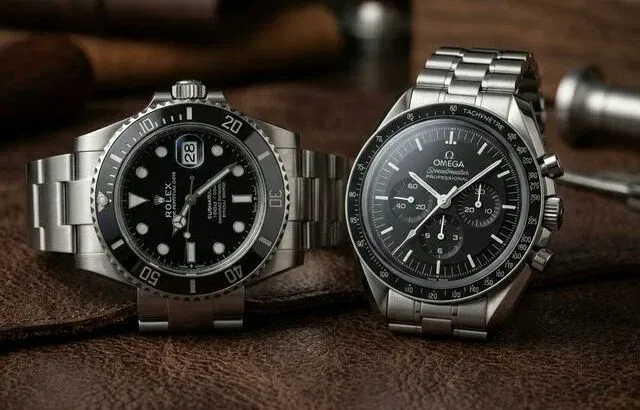
Rolex and Omega are the two most recognizable luxury watch brands in the world. Both Swiss, both prestigious, both capable of lasting generations. But they serve different buyers at different price points — and the choice between them reveals a lot about what you value.
The Short Answer
Rolex is the ultimate status symbol — unmatched resale value, iconic design, and instant recognition. Omega offers comparable (sometimes superior) watchmaking at significantly lower prices — with its own aerospace and Olympic heritage. For investment, Rolex. For pure horological value, Omega.
Full Comparison
| Feature | Rolex | Omega |
|---|---|---|
| Founded | 1905 (London/Geneva) | 1848 (La Chaux-de-Fonds) |
| Owner | Hans Wilsdorf Foundation (private) | Swatch Group |
| Entry Price | ~$6,000 (Oyster Perpetual) | ~$3,300 (Aqua Terra) |
| Popular Models | Submariner, Datejust, GMT-Master II | Speedmaster, Seamaster, Planet Ocean |
| Movement | In-house (3200 series, 70hr reserve) | In-house Co-Axial (Master Chronometer) |
| Accuracy | ±2 sec/day (Superlative Chronometer) | 0-5 sec/day (Master Chronometer, METAS) |
| Anti-Magnetic | Standard shielding | 15,000+ gauss (Master Chronometer) |
| Resale Value | Exceptional (often above retail) | Good (40-60% of retail) |
| Heritage Claim | First waterproof watch, Everest, deep sea | Moonwatch (Apollo 11), Olympic timekeeper |
| Availability | Waitlists (2+ years for popular models) | Generally available |
Movement and Technology
Omega’s Master Chronometer certification is arguably the most rigorous testing standard in the industry — tested by METAS for accuracy, magnetic resistance (15,000+ gauss), water resistance, and power reserve. Their Co-Axial escapement reduces friction and extends service intervals.
Rolex’s Superlative Chronometer certification tests to ±2 seconds per day — tighter than standard COSC. However, Rolex movements don’t match Omega’s magnetic resistance. Both brands use entirely in-house movements, but Omega’s technical specifications are objectively more impressive at comparable or lower prices.
Investment and Resale
This is Rolex’s undeniable strength. Many Rolex models sell above retail on the secondary market — the Submariner, GMT-Master II, and Daytona are genuine investments. Omega watches depreciate like most luxury goods (30-50% after purchase), though the Speedmaster Moonwatch holds value relatively well.
Which Should You Buy?
Choose Rolex if:
- You want the ultimate status symbol and brand recognition
- Resale value and investment potential matter to you
- You want a watch that’s instantly recognized worldwide
- You’re willing to navigate waitlists and pay premium prices
Choose Omega if:
- You want superior technology at a lower price
- You value horological innovation over brand status
- You want to actually buy the watch without a waitlist
- You appreciate space exploration and Olympic heritage
Frequently Asked Questions
Is Omega as good as Rolex?
In terms of pure watchmaking, yes — and in some technical aspects (magnetic resistance, movement certification), Omega is objectively superior. Rolex’s advantage is brand prestige, resale value, and cultural status. As a timepiece, Omega matches or exceeds Rolex at every price point they compete at.
Do Rolex watches appreciate in value?
Many popular models do — the Submariner, GMT-Master II, and Daytona regularly sell above retail. However, less popular models depreciate like any luxury watch. Buying a Rolex purely as an investment requires choosing the right model.
Related Articles
- Matte vs Glossy Hair Products: Which Finish Is Right for You?
- Beard Moisturizer vs Beard Oil: What’s the Difference and Which Do You Need?
- Tumi vs Samsonite: Which Luggage Brand Is Better?
- Eau de Toilette vs Eau de Parfum: What’s the Actual Difference?
- FUE vs FUT Hair Transplant: Which Method Is Right for You?

Axel is the founder of ReadySleek and has spent over 5 years researching and testing men’s grooming products, skincare routines, and hair loss treatments. His work combines hands-on product testing with insights from dermatologists and trichologists to deliver evidence-based grooming advice.
He specializes in men’s skincare (including ingredient analysis of retinol, niacinamide, and SPF), hair loss science (minoxidil, finasteride, hair transplants), men’s fragrance (with 80+ colognes personally tested), and body grooming techniques.
When he’s not reviewing the latest grooming products, Axel focuses on making complex grooming topics accessible and actionable for everyday guys.