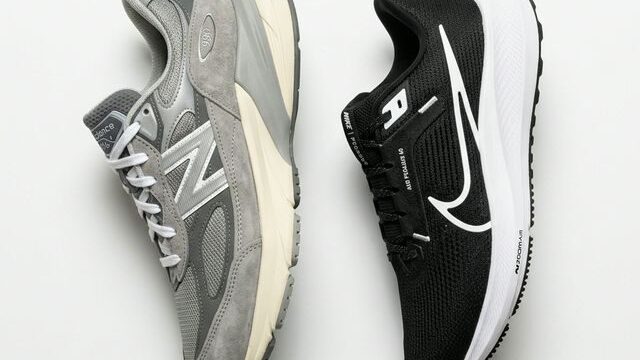
New Balance and Nike take fundamentally different approaches to comfort, fit, and design. While Nike dominates marketing and cultural relevance, New Balance has quietly built a reputation as the comfort king of sneakers. Here’s how they actually compare.
The Short Answer
New Balance wins on out-of-box comfort, width options, and all-day wearability. Nike wins on responsiveness, energy return, and trend-driven design. For walking and everyday wear, New Balance. For running performance and style, Nike.
Full Comparison
| Feature | New Balance | Nike |
|---|---|---|
| Founded | 1906 (Boston) | 1964 (Oregon) |
| Key Cushioning | Fresh Foam X, FuelCell | Air, ZoomX, ReactX |
| Comfort Feel | Plush, cloud-like, soft | Bouncy, responsive, springy |
| Width Options | Standard, Wide (2E), Extra-Wide (4E) | Standard only (mostly) |
| Avg. Running Shoe Price | ~$120 | ~$140 |
| Best Comfort Runner | 1080v15, More v6 | Vomero 18, Invincible 3 |
| Best Casual Sneaker | 990v6, 550, 574 | Air Force 1, Dunk, Air Max |
| Made in USA | Yes (some models) | No |
| Style Trend (2025) | Rising (quiet luxury, “dad shoe”) | Still dominant but cooling |
Comfort and Cushioning
New Balance’s Fresh Foam X is designed for maximum plush comfort. Their 1080v15 and Fresh Foam More v6 deliver some of the softest, most cushioned rides available. The feeling is cloud-like — your feet sink in and feel supported all day. FuelCell adds nitrogen-infused TPU foam for energy return without sacrificing softness.
Nike’s ZoomX and ReactX focus more on responsiveness. The Vomero 18 offers incredible cushion, but the feeling is bouncier — more “trampoline” than “cloud.” Nike prioritizes energy return for running performance, which makes their shoes feel more energetic but sometimes less relaxed for all-day walking.
Fit and Width
This is New Balance’s biggest advantage. They offer Wide (2E) and Extra-Wide (4E) options across most of their lineup. If you have wide feet or prefer roomy toe boxes, New Balance is the clear winner.
Nike predominantly offers standard widths — a narrower fit that works well for people with standard or slim feet but can be uncomfortable for wider feet. Nike tends to run small, so half-sizing up is common.
Lifestyle and Fashion
Both brands are having cultural moments. New Balance’s 990v6 and 550 have become the sneakers of choice for the “quiet luxury” movement — minimal branding, premium materials, normcore cool. Nike still dominates streetwear with the Air Force 1, Dunk, and Jordan lines, but the hype has cooled slightly in 2024–2025.
Notably, New Balance still makes some sneakers in the USA (990 series, 992, 993) — a genuine differentiator for buyers who value domestic manufacturing.
Which Should You Choose?
Choose New Balance if:
- Comfort is your #1 priority
- You have wide or extra-wide feet
- You want premium Made-in-USA options
- You prefer understated, “quiet luxury” style
Choose Nike if:
- You want maximum responsiveness for running
- You prefer bold, trend-driven designs
- You have standard-width feet
- You care about hype culture and resale value
Frequently Asked Questions
Are New Balance more comfortable than Nike?
For most people, yes — especially for all-day wear and walking. New Balance’s Fresh Foam is softer and more plush, and their width options mean a better fit for more foot shapes. Nike is more comfortable for running at speed thanks to responsive cushioning.
Why are New Balance 990s so expensive?
The 990 series (v5, v6) is partially made in the USA using premium materials and construction. This domestic manufacturing drives prices to $185–$200, comparable to Nike’s most premium lifestyle options.

Axel Lander is the founder and editor of ReadySleek. He publishes practical guides on men’s style, grooming, and fragrance, with a focus on clear comparisons, value, and the trade-offs readers should know before deciding.