If you’re considering a hair transplant, you’ll quickly encounter two main techniques: FUE (Follicular Unit Extraction) and FUT (Follicular Unit Transplantation, also called the “strip method”). Both work — but they have very different trade-offs in terms of scarring, recovery, cost, and results.
This guide breaks down each method so you can make an informed decision with your surgeon.
FUE: Follicular Unit Extraction
How It Works
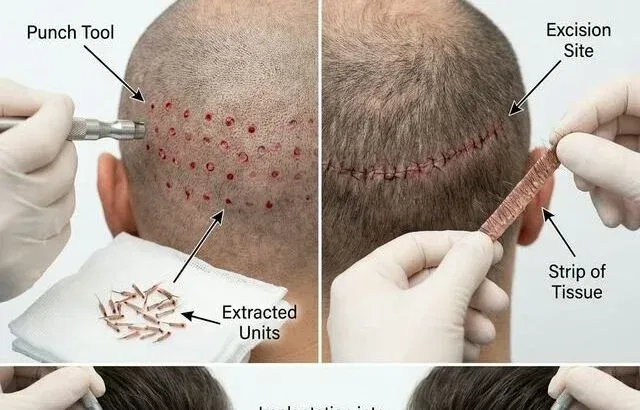
The surgeon uses a tiny circular punch tool (0.6–1.0mm) to extract individual hair follicles from the donor area (usually the back of the head). These follicles are then transplanted into the thinning areas.
Pros
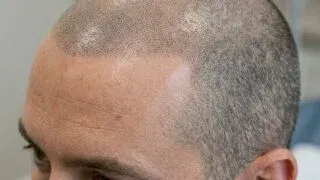
- ✅ No linear scar — tiny dot scars that are virtually invisible, even with short hair
- ✅ Faster recovery — most men return to work within 3–5 days
- ✅ Less post-operative pain
- ✅ Can harvest from body hair (beard, chest) in some cases
- ✅ Suitable for smaller sessions and touch-ups
Cons
- ❌ More expensive ($6,000–$15,000+ depending on grafts)
- ❌ Longer procedure time (6–10 hours for large sessions)
- ❌ Higher transection rate — slightly more follicle damage during extraction
- ❌ Large sessions may require shaving the entire donor area
- ❌ Graft survival rate slightly lower than FUT in some studies
FUT: Follicular Unit Transplantation (Strip Method)
How It Works
The surgeon removes a thin strip of skin (typically 15–25cm long, ~1cm wide) from the back of the head. The strip is divided into individual follicular units under a microscope, then transplanted.
Pros
- ✅ Higher graft yield per session — can harvest 3,000–4,000+ grafts
- ✅ Lower cost per graft ($3–6 vs $5–10 for FUE)
- ✅ Higher graft survival rate (studies show 95–98%)
- ✅ Faster procedure time (4–8 hours)
- ✅ No need to shave the entire head
Cons
- ❌ Linear scar on the back of the head — visible with short hair
- ❌ Longer recovery — 10–14 days before sutures are removed
- ❌ More post-operative pain and tightness
- ❌ Scar may widen over time in some patients
- ❌ Less suitable for patients who wear very short hairstyles
Side-by-Side Comparison
| Factor | FUE | FUT |
|---|---|---|
| Scarring | Tiny dot scars (nearly invisible) | Linear scar (hideable with longer hair) |
| Recovery Time | 3–5 days | 10–14 days |
| Pain Level | Low | Moderate |
| Cost (US avg) | $8,000–$15,000 | $5,000–$10,000 |
| Max Grafts/Session | 2,000–3,000 | 3,000–4,000+ |
| Graft Survival Rate | 90–95% | 95–98% |
| Can Wear Hair Short? | Yes | Need 2+ inches to hide scar |
| Procedure Duration | 6–10 hours | 4–8 hours |
| Best For | Smaller sessions, men who wear short hair | Maximum coverage, budget-conscious |
Which Should You Choose?
Choose FUE if:
- You want to wear short hairstyles (buzz cuts, fades)
- You need a smaller session (under 2,500 grafts)
- You want faster recovery
- You’re willing to pay more for minimal scarring
- You may want future transplant sessions
Choose FUT if:
- You need maximum grafts in one session (Norwood 4–6 — see our Norwood Scale guide)
- Budget is a primary concern
- You’re okay wearing hair at least 2 inches long
- You want the highest possible graft survival rate
Many top surgeons now recommend a combined approach for severe hair loss: FUT for the first large session, then FUE for future touch-ups.
Cost Breakdown (2026)
| Region | FUE (per graft) | FUT (per graft) | 2,500 graft session |
|---|---|---|---|
| USA | $5–10 | $3–6 | FUE: $12,5K–$25K / FUT: $7.5K–$15K |
| UK | £4–8 | £2–5 | FUE: £10K–£20K / FUT: £5K–£12.5K |
| Turkey | $1.50–3 | $1–2 | FUE: $3.75K–$7.5K (incl. hotel) |
Recovery Timeline
FUE Recovery
- Day 1–3: Mild swelling, tiny scabs on donor/recipient areas
- Day 5–7: Return to work. Scabs begin to fall off.
- Week 2–4: Transplanted hairs fall out (“shock loss” — this is normal)
- Month 3–4: New growth begins
- Month 8–12: Full results visible
FUT Recovery
- Day 1–3: Moderate pain at donor site. Sutures/staples in place.
- Day 10–14: Sutures removed. Can return to most activities.
- Week 3–4: Scar begins to fade. Shock loss occurs.
- Month 3–4: New growth begins
- Month 8–12: Full results visible
Combining With Other Treatments
Most surgeons recommend combining a hair transplant with ongoing medical treatment to protect remaining hair:
- Minoxidil — to maintain and thicken existing hair
- Finasteride — to block DHT and prevent further loss
- Microneedling — to enhance minoxidil absorption
Without these treatments, hair loss will continue in non-transplanted areas, potentially leaving an unnatural pattern.
FAQ
Which lasts longer, FUE or FUT?
Both are permanent. Transplanted hairs are genetically resistant to DHT and will continue growing for life. The surrounding non-transplanted hair may continue thinning without treatment.
Can I get FUE after FUT?
Yes. Many patients get an initial FUT for maximum coverage, then FUE for refinement or additional sessions later.
Does FUE hurt?
Both procedures use local anesthesia. You’ll feel pressure but no pain during the procedure. FUE has less post-operative discomfort.
How do I choose a surgeon?
Look for ISHRS (International Society of Hair Restoration Surgery) members. Ask to see before/after photos of patients with similar hair loss patterns. Avoid clinics that have technicians perform the extraction — the surgeon should do this.
For the full picture on hair transplants, read our comprehensive hair transplant guide. To understand your hair loss stage, check the Norwood Scale.

Axel is the founder of ReadySleek and has spent over 5 years researching and testing men’s grooming products, skincare routines, and hair loss treatments. His work combines hands-on product testing with insights from dermatologists and trichologists to deliver evidence-based grooming advice.
He specializes in men’s skincare (including ingredient analysis of retinol, niacinamide, and SPF), hair loss science (minoxidil, finasteride, hair transplants), men’s fragrance (with 80+ colognes personally tested), and body grooming techniques.
When he’s not reviewing the latest grooming products, Axel focuses on making complex grooming topics accessible and actionable for everyday guys.