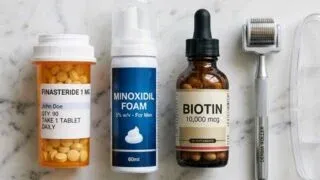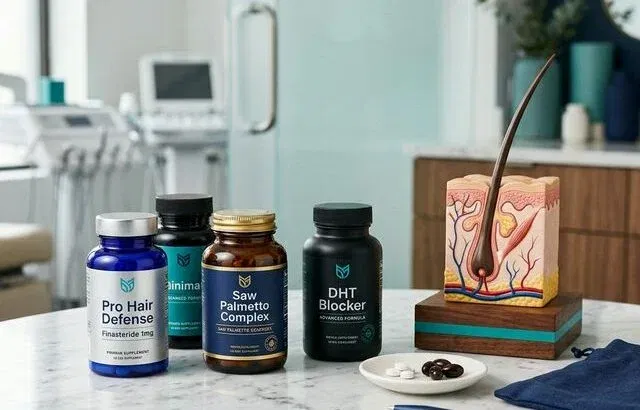
DHT (dihydrotestosterone) is the hormone most directly responsible for male pattern baldness. It shrinks hair follicles until they can no longer produce visible hair. DHT blockers work by reducing DHT levels or preventing it from binding to follicles — but do they actually stop hair loss? Here’s what the science says.
What Is DHT and Why Does It Cause Hair Loss?
DHT is an androgen hormone derived from testosterone via the enzyme 5-alpha reductase. While DHT plays important roles during puberty (deepening voice, body hair growth, muscle development), it becomes problematic for scalp hair as you age. In men genetically predisposed to pattern baldness, DHT binds to receptors on scalp follicles, triggering a process called miniaturization — the follicle gradually shrinks, producing thinner, shorter, lighter hairs until it stops producing visible hair entirely.
Not all hair follicles are equally sensitive. The follicles on the top and front of your scalp have more DHT receptors, which is why hair loss follows the classic pattern (receding hairline, thinning crown) while the sides and back remain. This is also why hair transplants work — transplanted follicles from the back retain their DHT resistance.
Types of DHT Blockers
Prescription DHT Blockers
| Treatment | How It Works | DHT Reduction | Effectiveness |
|---|---|---|---|
| Finasteride (Propecia) | Blocks Type II 5-alpha reductase | ~70% reduction in scalp DHT | 86% stop further loss, 65% regrow hair |
| Dutasteride (Avodart) | Blocks Type I and II 5-alpha reductase | ~90% reduction in scalp DHT | More effective than finasteride but more side effects |
Finasteride is the gold standard. At 1mg daily, it’s FDA-approved for male pattern baldness and backed by decades of clinical data. In a 5-year study, 90% of men maintained or improved hair count. Side effects are real but relatively rare (~2-4%): decreased libido, erectile difficulty, and in very rare cases, persistent effects after stopping (though this is debated in the medical literature).
Dutasteride is more powerful, blocking both subtypes of 5-alpha reductase and reducing DHT by approximately 90%. Studies show it’s slightly more effective than finasteride for hair count, but it’s not FDA-approved for hair loss (used off-label) and carries a higher side effect profile.
Natural DHT Blockers
| Ingredient | Evidence Level | How to Use |
|---|---|---|
| Saw Palmetto | Moderate — some studies show 30-40% efficacy vs finasteride | 320mg daily (oral supplement) |
| Pumpkin Seed Oil | Promising — one study showed 40% hair count increase | 400mg daily (oral) or topical |
| Green Tea (EGCG) | Limited — mostly in-vitro studies | Topical application or 2-3 cups daily |
| Pygeum | Limited — primarily prostate studies | 100mg daily (oral supplement) |
| Reishi Mushroom | Preliminary — animal studies show 5-AR inhibition | Supplement form |
Natural DHT blockers are significantly weaker than prescription options. Saw palmetto has the most evidence — a meta-analysis showed it’s roughly 30-40% as effective as finasteride. That said, it has virtually no side effects and can be a reasonable first step for men not ready for prescription medication. Pumpkin seed oil is the next most promising, with one randomized controlled trial showing a 40% improvement in hair count over 24 weeks.
Topical DHT Blockers
Topical DHT blockers aim to reduce DHT at the follicle level without systemic effects. Topical finasteride (0.25% solution) applies the drug directly to the scalp. Early studies show it reduces scalp DHT by ~40-50% while keeping blood DHT levels mostly unchanged — potentially offering effectiveness with fewer systemic side effects. It’s becoming more widely available through telemedicine hair loss companies. Ketoconazole shampoo (Nizoral) has mild anti-DHT properties when used 2-3 times per week and is available over the counter.
DHT Blockers vs Other Hair Loss Treatments
| Treatment | Mechanism | Best For | Can Combine? |
|---|---|---|---|
| DHT Blockers (finasteride) | Stops the CAUSE of hair loss | Maintaining what you have | Yes — combine with minoxidil |
| Minoxidil | Stimulates growth (doesn’t address DHT) | Regrowing lost hair | Yes — the “Big 3” combo |
| Microneedling | Stimulates collagen and growth factors | Enhancing other treatments | Yes — amplifies minoxidil |
The most effective approach combines a DHT blocker (to stop the cause) with minoxidil (to stimulate growth) and microneedling (to enhance absorption and stimulate follicles). This is known as the “Big 3” in hair loss communities and consistently produces the best results.
Should You Take a DHT Blocker?
If you’re losing hair and want to keep it, a DHT blocker is the most effective tool available. Start with finasteride if you’re comfortable with prescription medication — the side effect rate is low and results are well-documented. If you prefer natural options, try saw palmetto + pumpkin seed oil for 6 months, but be realistic about expectations. Combine any DHT blocker with minoxidil for maximum results.
Frequently Asked Questions
Do DHT blockers have side effects?
Prescription DHT blockers (finasteride) have a reported side effect rate of 2-4%, primarily decreased libido and erectile changes. These typically resolve after stopping the medication. Natural DHT blockers like saw palmetto have minimal reported side effects. Always consult a doctor before starting prescription DHT blockers.
How long do DHT blockers take to work?
Most men see reduced shedding within 3 months and visible improvement at 6-12 months. DHT blockers work by slowing and stopping loss first — regrowth is a bonus. You may experience initial shedding in the first month as weaker hairs are replaced. Full results typically require 12-18 months of consistent use.
Related Articles
- Finasteride vs Minoxidil: Which Is Better?
- Best DHT Blocker Shampoos
- Best Hair Growth Products for Men
- Microneedling for Hair Loss
- Norwood Scale: Identify Your Hair Loss Stage
Related: Hair Loss Treatment Resources

Axel is the founder of ReadySleek and has spent over 5 years researching and testing men’s grooming products, skincare routines, and hair loss treatments. His work combines hands-on product testing with insights from dermatologists and trichologists to deliver evidence-based grooming advice.
He specializes in men’s skincare (including ingredient analysis of retinol, niacinamide, and SPF), hair loss science (minoxidil, finasteride, hair transplants), men’s fragrance (with 80+ colognes personally tested), and body grooming techniques.
When he’s not reviewing the latest grooming products, Axel focuses on making complex grooming topics accessible and actionable for everyday guys.