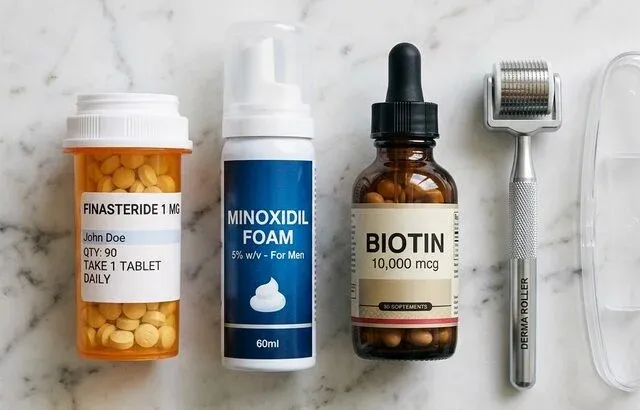
The hair growth product market is flooded with options ranging from FDA-approved medications to essential oil blends with zero clinical evidence. Separating what actually works from what doesn’t can save you months of wasted time and hundreds of dollars.
This guide covers the best hair growth products for men in 2026, categorized by what they do and how strong the evidence is behind them. Every pick is backed by clinical data or dermatologist recommendations.
The 8 Best Hair Growth Products for Men
1. Kirkland Minoxidil 5% Foam – Best Overall
Type: Topical – FDA-approved | Price: ~$25–40 (6-month supply) | Evidence: Strong
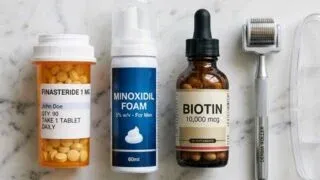
Minoxidil is the gold standard topical treatment for hair loss. Kirkland’s foam is the same active ingredient as Rogaine at a fraction of the price. Apply twice daily to thinning areas. Results visible in 3–6 months, with peak results at 12 months. The foam formulation dries quickly and doesn’t leave a greasy residue.
For the full deep dive, see our complete minoxidil guide.
2. Finasteride 1mg (Generic) – Most Effective Single Treatment
Type: Oral – FDA-approved (prescription) | Price: ~$5–15/month | Evidence: Very strong
Finasteride blocks ~70% of DHT, the hormone that causes male pattern baldness. Clinical trials show 86% of men maintain or improve their hair after 1 year. It’s the most effective single treatment available – especially when combined with minoxidil. Requires a prescription from your doctor or a telehealth service.
For side effects and detailed information, see our complete finasteride guide.
3. Nizoral Anti-Dandruff DHT blocker shampoos (Ketoconazole 1%) – Best Supporting Shampoo
Type: Medicated shampoo | Price: ~$15–20 | Evidence: Moderate
Ketoconazole doesn’t just fight dandruff – it has anti-androgenic properties that may reduce DHT at the scalp level. Studies show it can improve hair density when used 2–3 times per week alongside minoxidil and/or finasteride. Not a standalone solution, but an excellent addition to any hair loss protocol.
4. Dr. Pen M8S Microneedling Pen – Best Growth Stimulator
Type: Device | Price: ~$60–80 | Evidence: Moderate-strong
Microneedling creates tiny punctures in the scalp that trigger wound-healing responses, boost collagen production, and significantly enhance minoxidil absorption. Studies show microneedling (1.0–1.5mm depth) once weekly combined with minoxidil produces 4x more hair regrowth than minoxidil alone. Use once per week at 1.0–1.5mm depth on thinning areas.
5. Nutrafol Men’s Hair Growth Supplement – Best Supplement
Type: Oral supplement | Price: ~$79/month | Evidence: Moderate
Nutrafol is a multi-targeted supplement containing saw palmetto (a mild natural DHT blocker), marine collagen, ashwagandha (for stress-related hair loss), biotin, and vitamins A, C, and D. Clinical studies showed a 70% improvement in hair growth and an 80% improvement in hair thickness after 6 months. Best for men with diffuse thinning or nutritional deficiencies contributing to hair loss.
6. Revita High-Performance Hair Stimulating Shampoo – Best Daily Shampoo
Type: Stimulating shampoo | Price: ~$28–35 | Evidence: Moderate
Revita contains caffeine, biotin, ketoconazole, and Niacinamide in a sulfate-free formula. It’s designed as a daily driver shampoo that supports hair growth while cleaning. Not a replacement for minoxidil or finasteride, but a solid daily companion that keeps the scalp healthy and creates an optimal environment for growth.
7. iRestore Professional Laser Cap – Best Device
Type: Low-level laser therapy (LLLT) | Price: ~$695 | Evidence: Moderate
LLLT uses red light at specific wavelengths (650–670nm) to stimulate hair follicle cellular activity. FDA-cleared for hair loss treatment. Studies show modest hair density improvements (10–20%) after consistent use (25 minutes every other day for 6+ months). Expensive upfront but no recurring costs. Best as a complement to minoxidil and finasteride, not a standalone solution.
8. Hair Fibers (Toppik) – Best Instant Cosmetic Fix
Type: Cosmetic concealer | Price: ~$25–30 | Evidence: N/A (cosmetic)
Toppik keratin fibers don’t grow hair – they conceal thinning areas instantly. The electrostatically charged fibers bind to existing hair, making it look significantly thicker. Waterproof versions resist rain and sweat. The best immediate confidence booster while you wait for medical treatments to work (which can take 6–12 months).
Comparison Table
| Product | Type | Evidence | Price | Best For |
|---|---|---|---|---|
| Kirkland Minoxidil 5% | Topical | ⭐⭐⭐⭐⭐ | $25–40/6mo | Crown/vertex thinning |
| Finasteride 1mg | Oral (Rx) | ⭐⭐⭐⭐⭐ | $5–15/mo | All pattern baldness |
| Nizoral Shampoo | Shampoo | ⭐⭐⭐ | $15–20 | Supporting treatment |
| Dr. Pen Microneedling | Device | ⭐⭐⭐⭐ | $60–80 | Boosting minoxidil results |
| Nutrafol | Supplement | ⭐⭐⭐ | $79/mo | Nutritional/stress hair loss |
| Revita Shampoo | Shampoo | ⭐⭐⭐ | $28–35 | Daily scalp health |
| iRestore Laser Cap | LLLT device | ⭐⭐⭐ | $695 | Complementary treatment |
| Toppik Fibers | Cosmetic | N/A | $25–30 | Instant concealing |
Frequently Asked Questions
What’s the best combination of products?
The gold standard protocol is: Finasteride 1mg daily + Minoxidil 5% twice daily + Ketoconazole shampoo 2–3x/week. This is sometimes called “the big three” in hair loss communities. Adding weekly microneedling to this protocol can further boost results. See our complete hair loss guide for treatment plans by Norwood stage.
Do hair growth supplements actually work?
Supplements like Nutrafol can help if your hair loss has a nutritional or stress component. However, they are significantly less effective than FDA-approved treatments (minoxidil and finasteride) for androgenetic alopecia (male pattern baldness). Supplements work best as a complement to medical treatment, not a replacement.
When should I see a dermatologist?
If you’re experiencing rapid or patchy hair loss (which could indicate alopecia areata or other conditions), if you’re unsure about your diagnosis, or if you’ve been using treatments for 12+ months without improvement. A dermatologist can properly diagnose your hair loss type and create a personalized treatment plan.

Ready Sleek founder. Obsessed with casual style and the minimalist approach to building a highly functional wardrobe. Also a fan of classic, vintage hairstyles.