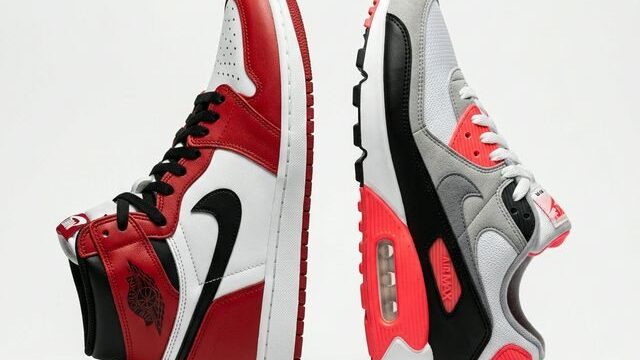
Air Jordan and Air Max are Nike’s two most iconic sneaker lines — but they serve completely different purposes in 2025. One is basketball royalty turned fashion grail; the other is running innovation turned streetwear staple. Here’s the full breakdown.
The Short Answer
Air Jordan is the ultimate sneaker status symbol — limited releases, massive resale value, and basketball heritage make them collectible fashion pieces. Air Max is the versatile everyday sneaker — visible Air cushioning, wide availability, and comfortable all-day wear. Jordans for culture and collecting; Air Max for daily style.
Full Comparison
| Feature | Air Jordan | Air Max |
|---|---|---|
| Launched | 1985 (Jordan 1) | 1987 (Air Max 1) |
| Named After | Michael Jordan | Visible Air technology |
| Price (Retail) | ~$120–$250 | ~$90–$200 |
| Resale Value | Very high (limited releases 2-10x) | Low to moderate |
| Availability | Limited drops, sell out quickly | Widely available, GR releases |
| Most Popular Model | Jordan 1, Jordan 4, Jordan 11 | Air Max 1, Air Max 90, Air Max 97 |
| Cushioning | Varies (Air, Zoom Air by model) | Visible Air units (Max Air) |
| Comfort | Moderate (varies by model) | Good to excellent (Air cushioning) |
| Culture | Basketball, hip-hop, sneaker culture | Running, UK grime, rave, streetwear |
| Collecting | Massive (Jordan collecting is a market) | Growing (Air Max Day community) |
Style and Culture
Air Jordan created sneaker culture. The Jordan 1 was banned by the NBA, launching the shoe into mythology. The Jordan brand is its own $5B+ sub-brand within Nike, with collaborations (Travis Scott, Off-White, A Ma Manière) that command thousands on resale. Wearing Jordans is a cultural statement — it signals awareness of sneaker history and fashion.
Air Max built their own culture — particularly in Europe and the UK. The Air Max 90 and 97 are staples of UK grime, rave, and football casuals culture. Air Max Day (March 26) is a global celebration. The visible Air bubble is as iconic a design element as the Jumpman logo. Air Max are less “hype” but more universally wearable.
Comfort and Everyday Wear
Air Max wins on daily comfort. The visible Air cushioning provides genuine impact protection and all-day wearability. The Air Max 90 and 270 are particularly comfortable for walking. Most Air Max models are designed as lifestyle running shoes — built for movement.
Jordans vary widely by model. The Jordan 1 is famously stiff with minimal cushioning (it’s a 1985 design). The Jordan 4 and 11 are more comfortable. But most Jordans aren’t designed for all-day comfort — they’re designed for style. Extended walking in Jordan 1s can be uncomfortable.
Which Should You Buy?
Choose Air Jordan if: You want sneakers with maximum cultural cachet. You’re interested in collecting and resale potential. You appreciate basketball heritage and sneaker history. You want statement shoes that get noticed and commented on.
Choose Air Max if: You want comfortable, stylish everyday sneakers. You prefer widely available models you can actually buy. You want versatile shoes that work with any outfit. You value comfort and design over hype and resale.
Frequently Asked Questions
Are Jordans worth the resale price?
That depends on your values. As fashion items, high-demand Jordans (Travis Scott, Off-White collabs) are genuine cultural artifacts. As wearable shoes, paying 3-5x retail is hard to justify. The best strategy is buying at retail through SNKRS drops or retail lottery — resale prices reflect hype, not inherent quality.
Which Air Max is the most comfortable?
The Air Max 270 and Air Max 2090 offer the most cushioning for all-day comfort. For a classic look with good comfort, the Air Max 90 is the sweet spot. The Air Max 97 looks incredible but can feel narrow. The Air Max 1 is the least cushioned but has the best heritage appeal.

Axel Lander is the founder and editor of ReadySleek. He publishes practical guides on men’s style, grooming, and fragrance, with a focus on clear comparisons, value, and the trade-offs readers should know before deciding.