
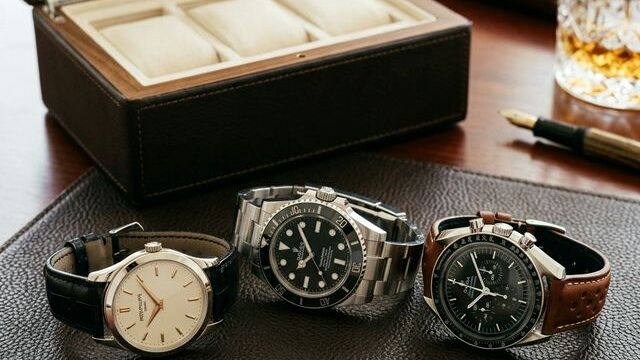
A watch is the only piece of jewelry most men can wear without overthinking it — and it says more about you than you’d think. The right watch elevates any outfit. But with thousands of options from $50 to $50,000, choosing can be paralyzing. Here’s a no-BS guide to men’s watch types, what looks good, and what to buy at every budget.
Other accessories raise the same questions – see should men wear earrings.
Watch Types Explained
| Type | Look | Best For | Price Range |
|---|---|---|---|
| Dress Watch | Thin, clean, minimal dial | Suits, formal events | ~$100-$5,000+ |
| Diver Watch | Bold, rotating bezel, rugged | Everyday, casual, outdoor | ~$150-$10,000+ |
| Chronograph | Sub-dials, sporty, complex | Casual, sporty, racing vibe | ~$100-$10,000+ |
| Field Watch | Simple, military-inspired, readable | Everyday, outdoor, casual | ~$50-$2,000 |
| Digital/Sport | LCD/LED display, tough | Gym, outdoor, travel | ~$50-$500 |
Your First Watch: What to Buy at Every Budget
| Budget | Our Pick | Type | Why |
|---|---|---|---|
| $50-100 | Casio MDV-106 “Duro” | Diver | Looks like a $500 watch. Best value in watchmaking. |
| $100-200 | Orient Bambino | Dress | Automatic movement, genuine quality at entry price |
| $200-500 | Seiko Presage/Hamilton Khaki | Dress/Field | Respected brands, excellent movements |
| $500-1000 | Tissot PRX/Longines | Various | Swiss quality, serious craftsmanship |
| $1000-5000 | Tudor Black Bay/Omega | Diver/Sport | Luxury territory, heirloom quality |
Watch Size and Fit
Case diameter: 38-42mm suits most wrists. Under 38mm looks small on large wrists. Over 44mm overpowers smaller wrists. Measure your wrist: 6-6.5″ wrist → 36-40mm watch. 6.5-7.5″ wrist → 38-42mm. 7.5″+ wrist → 40-46mm. Strap length: The watch should sit on the wrist bone, not sliding up and down. You should be able to fit one finger between the strap and your wrist. Weight: Lighter watches (under 80g) feel more comfortable but less premium. Heavier watches feel substantial but can fatigue your wrist. Try before buying if possible.
Frequently Asked Questions
Which wrist should I wear my watch on?
On your non-dominant hand. If you’re right-handed, wear it on your left wrist (and vice versa). This protects the watch from bumps during daily activities and keeps the crown accessible with your dominant hand for adjustments. That said, there’s no strict rule — wear it wherever is comfortable.
Related Articles

Axel Lander is the founder and editor of ReadySleek. He publishes practical guides on men’s style, grooming, and fragrance, with a focus on clear comparisons, value, and the trade-offs readers should know before deciding.