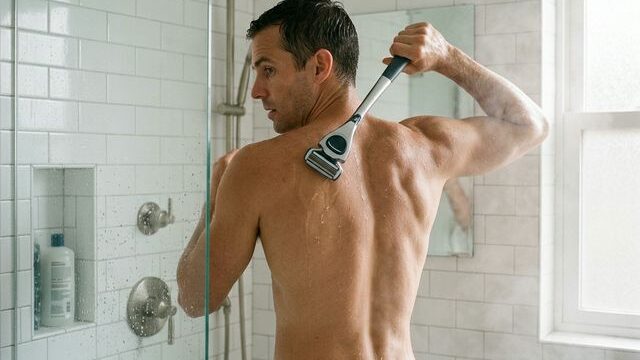
Shaving your own back seems impossible — and it kind of is with regular razors. But with the right tools and technique, you can get a smooth, hair-free back without asking anyone for help. Here’s the step-by-step guide, including the specific tools that make it actually doable.
The Right Tools (You Need a Back Shaver)
A regular razor won’t work — your arms can’t reach and the angle is wrong. You need a purpose-built back shaver with an extended handle. Here are the best options:
| Tool | Type | Price | Blade Life | Best For |
|---|---|---|---|---|
| BakBlade 2.0 Elite Plus | Manual blade | ~$35-45 | ~10 uses per cartridge | Best overall — foldable, wide blade |
| BAKblade 1.0 | Manual blade | ~$20-25 | ~8 uses | Budget option — basic but works |
| MANGROOMER Ultimate Pro | Electric | ~$50-60 | Blade lasts months | Best electric — adjustable handle |
| Razorba Back Shaver | Razor holder | ~$15-20 | Uses standard razors | Cheapest — attach any razor |
Step-by-Step: How to Shave Your Back Solo
Step 1: Prep
Take a warm shower first. The steam softens hair and opens pores, making shaving easier and reducing irritation. If your back hair is longer than 1/4 inch, trim it down first with an electric trimmer on a long guard setting — trying to shave long hair directly will clog the blade and pull painfully.
Step 2: Set Up Your Mirrors
Place a handheld mirror opposite your bathroom mirror so you can see your back from multiple angles. Mount it at shoulder height with a suction cup hook or lean it against something stable. A fogless shower mirror also works if you’re shaving in the shower.
Step 3: Apply Shave Gel
Use a thick shave gel (not foam — foam is too thin to see where you’ve shaved). Apply it with both hands reaching over your shoulders and around your sides. A long-handled lotion applicator can help reach the middle of your back. The gel serves two purposes: lubrication and visual marker for where you’ve already shaved.
Step 4: Shave
Direction: Shave downward (with the grain — back hair grows downward). This minimizes irritation and ingrown hairs. Pressure: Light, even strokes. Let the blade do the work — pressing hard causes nicks and razor burn. Pattern: Start at the shoulders and work down, using overlapping strokes. Do one side completely, then the other, then the center. Rinse the blade every 2-3 strokes to prevent clogging. Trouble spots: The spine area and lower back near the waistline are the hardest to reach. Use the handle’s articulation if available, or switch grip angles.
Step 5: Aftercare
Rinse with cool water to close pores. Apply an alcohol-free aftershave balm or aloe vera gel. Moisturize daily for the next 2-3 days to prevent dryness and itching. Wear a loose cotton shirt for the first day — tight synthetic fabrics against freshly shaved skin cause irritation. Avoid swimming, hot tubs, and heavy sweating for 24 hours.
Preventing Ingrown Hairs and Razor Bumps
Back skin is thick and resilient, so ingrown hairs are less common here than on the face or bikini area. Still, prevention matters: Exfoliate 2-3 days after shaving with a body scrub or exfoliating body wash to prevent dead skin from trapping regrowing hairs. Moisturize daily to keep skin supple. Don’t shave too frequently — wait at least 4-5 days between sessions. Use a salicylic acid body spray on the back after shaving to keep pores clear.
Frequently Asked Questions
How often should you shave your back?
Every 5-7 days for maintenance once you’ve done the initial shave. Back hair grows slower than facial hair, and the regrowth is less noticeable because the hair is finer. Many men find a weekly routine (like every Sunday morning in the shower) keeps things manageable.
Can you shave your own lower back?
Yes, the lower back is actually the easiest part to reach yourself. Reach around your sides with the back shaver handle angled upward. The middle-upper back (between the shoulder blades) is the hardest area. A back shaver with an articulating handle, like the BakBlade 2.0, makes this significantly easier.
Related Articles
- Back Hair Removal: Every Method Compared
- Best Body Groomers for Men
- How to Trim Body Hair Without Irritation
- Best Manscaping Kit
- Men’s Laser Hair Removal Guide

Axel Lander is the founder and editor of ReadySleek. He publishes practical guides on men’s style, grooming, and fragrance, with a focus on clear comparisons, value, and the trade-offs readers should know before deciding.