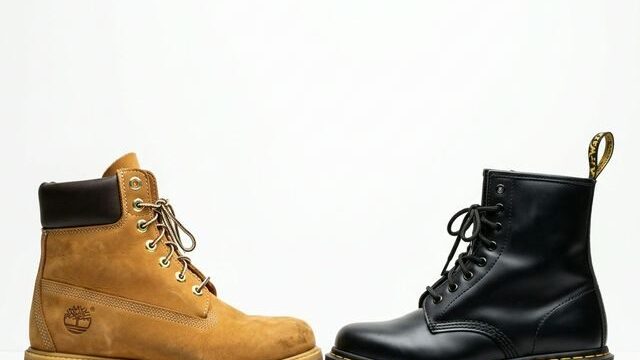
Timberland and Dr. Martens are two of the most iconic boot brands in the world — but they serve completely different purposes. One is built for the elements, the other for the streets. Here’s exactly how they compare.
The Short Answer
Timberland is the rugged, practical choice — waterproof, insulated, and built for outdoor conditions. Dr. Martens is the style-first boot — iconic silhouette, punk/grunge heritage, and superior urban aesthetics. Choose Timberland for function, Dr. Martens for fashion.
Full Comparison
| Feature | Timberland | Dr. Martens |
|---|---|---|
| Founded | 1973 (USA) | 1947 (Germany/England) |
| Iconic Model | 6-Inch Premium Boot | 1460 8-Eye Boot |
| Price Range | ~$130–$250 | ~$130–$200 |
| Waterproof | Yes (sealed seams) | Limited (water-resistant) |
| Insulation | Yes (PrimaLoft, 200g) | No |
| Break-In Period | Minimal (1–2 weeks) | Long (3–6 weeks) |
| Construction | Cemented sole, steel shank | Goodyear welt, AirWair sole |
| Comfort | Cushioned from day one | Excellent after break-in |
| Durability | 3–5+ years heavy use | 5–10+ years with care |
| Culture | Hip-hop, workwear, outdoor | Punk, grunge, indie, fashion |
| Best For | Cold weather, rain, hiking, work | Urban style, going out, casual |
Comfort and Break-In
Timberland wins on immediate comfort. The padded collar, anti-fatigue midsole, and cushioned insole make them wearable straight out of the box. The steel shank provides excellent arch support for long days on your feet.
Dr. Martens are famously uncomfortable at first. The stiff leather requires 3–6 weeks of breaking in, and the process can involve blisters. But once broken in, the AirWair “bouncing sole” provides a unique springy comfort that Docs lovers swear by.
Weather Protection
This is Timberland’s biggest advantage. Their boots are genuinely waterproof with sealed seams and PrimaLoft insulation. They’re designed for rain, snow, and cold weather. Dr. Martens’ standard leather offers some water resistance but they’re not waterproof — your feet will get wet in heavy rain.
Style
Dr. Martens wins on style versatility. The 1460 works with skinny jeans, wide-leg pants, shorts in summer, and dresses (for women). The cherry red, black, and patent options offer more fashion range. Timberlands have a more limited aesthetic — they look best with casual streetwear and workwear-inspired outfits.
Which Should You Buy?
Choose Timberland if:
- You need waterproof, weather-resistant boots
- You want immediate comfort with no break-in
- You work outdoors or walk in rain/snow frequently
- You prefer a rugged, workwear aesthetic
Choose Dr. Martens if:
- Style is your primary concern
- You want boots that last 10+ years
- You love punk/grunge/alternative fashion
- You’re willing to endure the break-in period
Frequently Asked Questions
Are Timberlands good for snow?
Yes. The 6-Inch Premium Boot is one of the best affordable winter boots — waterproof, insulated, and with decent traction. They handle light snow and cold rain very well. For deep snow, consider their dedicated winter boots with more aggressive tread.
How do you break in Dr. Martens faster?
Wear them around the house with thick socks for 30–60 minutes daily. Apply Wonder Balsam to soften the leather. Use a hairdryer on tight spots (while wearing them with thick socks). The break-in typically takes 3–6 weeks of regular short-duration wear.

Axel Lander is the founder and editor of ReadySleek. He publishes practical guides on men’s style, grooming, and fragrance, with a focus on clear comparisons, value, and the trade-offs readers should know before deciding.