Nike and Adidas are the two biggest sportswear brands on the planet — and the Nike vs Adidas debate is one of the most searched fashion comparisons online. Whether you’re buying running shoes, casual sneakers, or athletic wear, understanding how these brands differ can save you money and get you the right product.
The Short Answer
Nike focuses on bold innovation, performance technology, and aspirational marketing — typically at higher prices. Adidas emphasizes comfort, lifestyle crossover, and sustainability — often at a better price-to-value ratio. Both offer excellent quality; the best choice depends on your specific needs.
Complete Comparison
| Feature | Nike | Adidas |
|---|---|---|
| Founded | 1964 (USA) | 1949 (Germany) |
| Revenue (2024) | ~$51 billion | ~$24 billion |
| Key Technology | Air, ZoomX, React, Flyknit | Boost, Lightstrike Pro, Primeknit |
| Avg. Running Shoe Price | ~$140 | ~$110 |
| Fit Tendency | Runs narrow/small | True to size, slim |
| Style DNA | Bold, performance-driven, hype | Comfort-core, lifestyle, streetwear |
| Sustainability | Move to Zero initiative | 60% recycled/sustainable materials |
| Best For Running | Pegasus, Vomero, Invincible | Ultraboost, Adizero, Supernova |
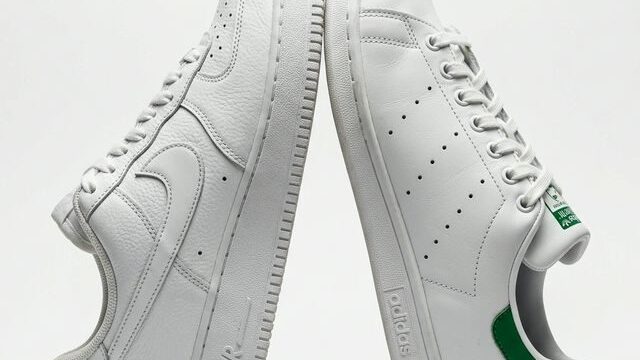
| Best Casual Sneaker | Air Force 1, Dunk, Air Max | Stan Smith, Gazelle, Samba |
Cushioning Technology
Nike Air has been the foundation since 1977 — pressurized air units in the sole that provide lightweight, springy cushioning. Modern Nike adds ZoomX (ultra-responsive foam for racing), React (durable all-purpose foam), and Flyknit uppers for a sock-like fit.
Adidas Boost arrived in 2013 and changed the comfort game entirely. Boost pellets (TPU foam) deliver incredible energy return and all-day comfort that many consider superior for walking and casual wear. Lightstrike Pro is Adidas’s performance racing foam that competes directly with Nike’s ZoomX.
The verdict: Nike Air feels bouncier and more responsive for sport. Adidas Boost feels more comfortable for all-day wear. Both are excellent — it’s a genuine preference call.
Fit and Sizing
Nike frequently runs narrow and small, especially in performance running shoes. If you have wide feet, you may need to go half a size up or look for wide-fit options.
Adidas generally runs true to size with a slim profile. The Primeknit upper material is more forgiving and adapts to foot shape better than Nike’s Flyknit in most models.
Casual Sneakers
For lifestyle and casual sneakers, both brands dominate:
- Nike: Air Force 1 (timeless classic), Dunk (skateboarding crossover), Air Max (90s retro), Jordan 1 (basketball heritage)
- Adidas: Stan Smith (minimalist leather), Gazelle (retro suede), Samba (indoor soccer classic), Forum (basketball heritage)
In 2024–2025, Adidas has had the cultural momentum with the Samba and Gazelle becoming fashion must-haves, while Nike’s Dunk and Air Force 1 hype has cooled slightly.
Pricing
Nike is generally 15–25% more expensive across comparable categories. This applies to running shoes, casual sneakers, and athletic apparel. Adidas offers better value at most price points, particularly in the $80–$120 range where Ultraboost and Gazelle models compete with Nike’s $120–$160 offerings.
Which Should You Choose?
Choose Nike if:
- You want cutting-edge performance technology for sport
- You prefer bold, statement-making designs
- You care about resale value and hype culture
- You’re a runner who wants the latest cushioning tech
Choose Adidas if:
- You prioritize all-day comfort (Boost cushioning)
- You want better value at most price points
- Sustainability matters to you
- You want timeless lifestyle sneakers (Samba, Stan Smith)
Frequently Asked Questions
Which brand has better quality — Nike or Adidas?
Both brands provide comparable quality at their respective price points. Adidas is sometimes cited as having a slight edge in durability, while Nike pushes more aggressively on innovation. The quality difference between them is marginal — you’re mostly paying for different design philosophies.
Are Nike shoes wider than Adidas?
Generally no — Nike tends to run narrow while Adidas runs slim but more true to size. Neither brand is ideal for wide feet without specifically choosing wide-fit options. If you have wider feet, try both brands on before buying.
Which brand is more sustainable?
Both are making progress, but Adidas currently leads with 60% recycled/sustainably sourced materials across products and packaging. Nike’s Move to Zero initiative is catching up, with innovations like Flyknit reducing manufacturing waste by 60%.

Axel Lander is the founder and editor of ReadySleek. He publishes practical guides on men’s style, grooming, and fragrance, with a focus on clear comparisons, value, and the trade-offs readers should know before deciding.