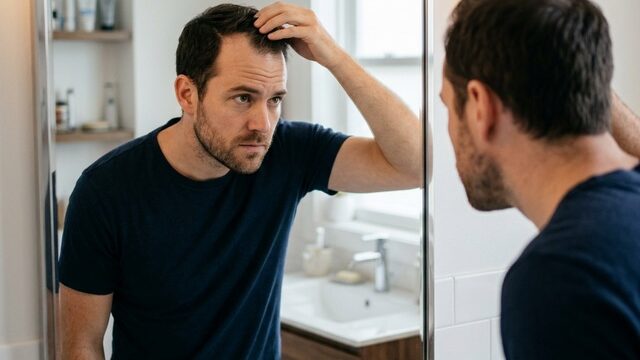
“Does wearing a hat cause baldness?” It’s one of the most persistent grooming myths – and it’s believed by millions of men who avoid wearing hats out of fear. The short answer: no, wearing hats does not cause hair loss. But there are a few nuances worth understanding.
If thinning is what actually worries you, our guide to natural hair loss remedies is the place to start.
What the Science Says
Male pattern baldness (androgenetic alopecia) is caused by genetics and DHT, not by external pressure, reduced blood flow, or hat-wearing. Multiple studies have confirmed this:
- A study published in the Journal of Plastic and Reconstructive Surgery found no association between hat-wearing frequency and hair loss in identical twins
- Dermatological research consistently attributes male pattern baldness to DHT sensitivity in genetically predisposed hair follicles – a hormonal process unaffected by wearing headgear
- Hair loss occurs in the same pattern (temples, crown, frontal) regardless of whether someone wears hats, helmets, or nothing at all
The mechanism of pattern baldness – DHT shrinking follicles from inside the scalp – cannot be influenced by external pressure on the surface. Hats sit on top of hair, not on the follicles beneath the skin.
Why the Myth Persists
- Timing correlation: Many men start wearing hats more frequently because they’re already losing hair and want to hide it. They associate hat-wearing with the hair loss that was already happening independently.
- “Hat hair” confusion: Taking off a hat and seeing flattened hair (or loose hairs on the inside of the hat) creates fear. But flat hair isn’t lost hair – it’s compressed hair that bounces back. And everyone loses 50–100 hairs daily naturally.
- Anecdotal “evidence”: People remember the bald uncle who always wore a hat and assume causation. But the uncle likely wore the hat because of his baldness, not the other way around.
- Intuitive logic: “Something pressing on my head must affect hair growth” sounds reasonable but isn’t how hair biology works.
When Hats CAN Affect Your Hair
While hats don’t cause pattern baldness, there are rare scenarios where headwear can contribute to hair issues:
1. Traction Alopecia (Very Tight Hats)
Extremely tight hats worn for extended periods every day can cause traction alopecia – hair loss from chronic pulling or tension on the hair follicle. This is the same mechanism that causes hair loss from very tight ponytails or braids. It requires consistently extreme tightness and is rare with normal hat-wearing. If your hat leaves deep indentations and causes headaches, it’s too tight.
2. Scalp Hygiene
Wearing dirty hats that trap sweat and bacteria against the scalp can contribute to folliculitis (infected hair follicles) or seborrheic dermatitis, which can indirectly affect hair health if chronic and untreated. Solution: wash your hats regularly and don’t wear the same sweaty hat multiple days in a row.
3. Breakage (Not Hair Loss)
Friction from rough hat materials can cause hair breakage – snapping the hair shaft above the skin. This creates shorter, frayed hairs but doesn’t affect the follicle. It looks like damage, not baldness, and the hair regrows to its normal length.
Hats Actually PROTECT Against Hair Loss
Ironically, wearing hats can be beneficial for hair health:
- UV protection: Chronic sun exposure damages hair follicles and accelerates scalp aging. Hats block UV rays – especially important for men with thinning hair or bald spots where the scalp is directly exposed.
- Reduces environmental damage: Wind, pollution, and extreme temperatures can damage hair. Hats provide a physical barrier.
- Protects treatments: If you’re using minoxidil or other topical treatments, UV exposure can degrade some active ingredients. A hat helps maintain effectiveness.
What DOES Cause Hair Loss
If you’re losing hair, focus on the actual causes:
- Genetics + DHT – The primary cause of male pattern baldness. See our complete hair loss guide
- Hormonal changes – Thyroid issues, testosterone changes
- Stress – Telogen effluvium (temporary shedding from severe stress)
- Nutritional deficiencies – Iron, zinc, vitamin D, protein
- Medications – Some drugs cause hair loss as a side effect
- Medical conditions – Alopecia areata, scalp infections, autoimmune disorders
Identify your Norwood stage and explore proven treatments in our best hair growth products guide.
Frequently Asked Questions
Should I stop wearing hats if I’m losing hair?
No. If you’re losing hair, it’s due to genetics and DHT – not your hat. If anything, hats protect thinning scalp from UV damage. Focus on proven treatments (finasteride, minoxidil) rather than avoiding hats.
Do helmets cause hair loss?
Same answer: no. Motorcycle and bicycle helmets don’t cause pattern baldness. The only risk is traction alopecia if the helmet is extremely tight and worn daily for many hours. Properly fitted helmets worn for normal durations have no effect on hair growth.
I find loose hairs inside my hat – is that normal?
Yes. You naturally shed 50–100 hairs per day. A hat simply collects some of these shed hairs that would otherwise fall on your shoulders, pillow, or shower drain. Finding hairs in your hat is 100% normal and not a sign of increased hair loss.
Related: Hair Loss Treatment Resources
Related Articles
- Best DHT Blocker Shampoos for Men (2025): Do They Actually Work?
- Best Scalp Moisturizers for Bald Men in 2025: Stop the Dry, Flaky Look
- Best Shampoo for Men in 2025: For Every Hair Type and Concern
- Does Wearing a Hat Cause Hair Loss? The Myth Debunked
- Does Creatine Cause Hair Loss? What the Science Actually Says

Axel Lander is the founder and editor of ReadySleek. He publishes practical guides on men’s style, grooming, and fragrance, with a focus on clear comparisons, value, and the trade-offs readers should know before deciding.