
Most men’s anti-aging guides fail to answer the most practical question: when exactly should I start, and what should I use at each age? The answer isn’t “as early as possible” for everything – some ingredients are unnecessary in your 20s, and others become critical in your 40s.
This guide maps out a decade-by-decade anti-aging strategy for men, based on how skin actually ages and what dermatologists recommend at each stage.
The eye area shows age first – our eye cream guide cover wrinkles, puffiness and dark circles.
How Male Skin Ages (The Science)
Men’s skin ages differently from women’s. Key differences:
- Men’s skin is ~25% thicker (more collagen) – this provides a natural head start, but collagen loss is linear and cumulative
- Collagen declines ~1% per year after age 25 – by 45, you’ve lost roughly 20% of your collagen
- Men produce more sebum – provides natural moisture but also means larger pores and more acne-prone skin
- Daily shaving – acts as mild exfoliation (positive) but also causes chronic irritation (negative)
- Men use less sunscreen – accumulating more UV damage over decades
The visible result: men tend to look younger than women at the same age through their 30s, then experience a more rapid decline in their 40s–50s as the accumulated damage catches up.
Your 20s: Prevention Mode
What’s happening: Collagen production starts declining around 25. Skin still looks great, but cumulative sun damage begins. Most aging visible in your 40s–50s is determined by UV exposure in your 20s.
Essential products:
- Sunscreen SPF 30+ (daily) – The single most impactful anti-aging product. Non-negotiable.
- Basic cleanser – Keep skin clean without stripping natural oils
- Moisturizer – Maintains hydration and skin barrier
Skip for now: retinol, eye cream, serums. Your skin produces enough collagen and turns over cells fast enough that these add marginal benefit in your early 20s.
Late 20s addition: Start a gentle retinol serum 2–3 times per week. This is the ideal time to begin – early enough to prevent, late enough that your skin benefits meaningfully.
Your 30s: Active Prevention + Early Treatment
What’s happening: Fine lines appear around eyes and forehead. Skin tone becomes slightly uneven. Dark circles become more noticeable. Cell turnover slows. This is when most men first notice aging – and when proactive treatment makes the biggest difference.
Essential products:
- Everything from your 20s, plus:
- Retinol serum (nightly) – Increase frequency from 2–3x/week to nightly. Stimulates collagen, increases cell turnover, fades early sun damage
- Vitamin C serum (morning) – Brightens, protects against free radicals, boosts sunscreen effectiveness
- Eye cream – Start addressing fine lines and dark circles around the eyes
Your 30s routine:
AM: Cleanser → Vitamin C → Moisturizer → Sunscreen
PM: Cleanser → Retinol → Eye cream → Moisturizer
Your 40s: Correction + Maintenance
What’s happening: Lines deepen. Skin loses elasticity and volume. Dark spots and uneven texture become more pronounced. Under-eye hollowing develops. Jaw definition softens. This is when men who’ve been using sunscreen since their 20s look noticeably younger than those who haven’t.
Essential products (upgrade):
- Everything from your 30s, plus:
- Upgrade to retinaldehyde or prescription tretinoin – Stronger retinoids produce faster results for established wrinkles
- Peptide serum – Supports collagen synthesis through a different pathway than retinol
- Niacinamide (if not already in your moisturizer) – Reduces hyperpigmentation, strengthens barrier, minimizes pores
- Chemical exfoliant (2x/week) – Removes accumulated dead skin that makes complexion look dull
Consider professional treatments: Chemical peels ($150–400), microneedling ($200–700), or Botox ($200–600 per area) for deeper lines. These produce results that topical products alone cannot achieve at this stage.
Your 50s and Beyond: Maintenance + Professional Treatments
What’s happening: Skin becomes thinner and drier. Wrinkles are established. Volume loss in cheeks and around eyes. Skin tags and keratoses may appear. Healing slows.
Focus shifts to:
- Rich, hydrating moisturizers – Skin needs more moisture as sebum production declines
- Continued retinoid use – Maintains collagen production, keeps cell turnover active
- Extra sun protection – Thinner skin is more vulnerable to UV damage
- Professional treatments as needed – Fillers, resurfacing lasers, and tightening procedures provide the most visible improvement at this stage
Quick Reference: What to Start When
| Product | Start Age | Why |
|---|---|---|
| Sunscreen SPF 30+ | 20s | 80–90% of visible aging is UV damage |
| Cleanser + Moisturizer | 20s | Foundation of any routine |
| Retinol serum | Late 20s | Collagen begins declining at ~25 |
| Vitamin C serum | 30s | Antioxidant protection + brightening |
| Eye cream | 30s | Thinnest skin shows aging first |
| Chemical exfoliant | 30s–40s | Cell turnover slows significantly |
| Peptide serum | 40s | Additional collagen support |
| Prescription retinoid | 40s | Stronger correction for established wrinkles |
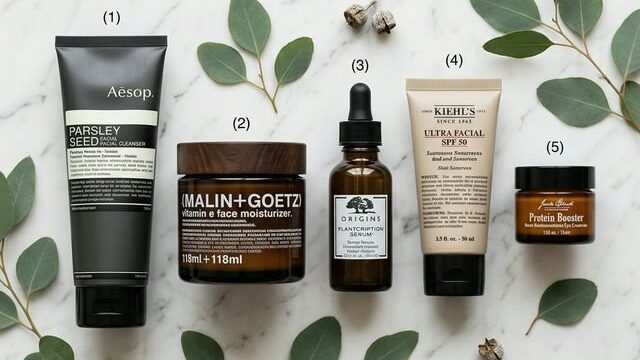
For specific product recommendations at each stage, see our best anti-aging products roundup and complete skincare routine guide.
Frequently Asked Questions
Is it too late to start in my 40s?
Absolutely not. Studies show that retinol produces visible improvement at any age. Sunscreen still prevents further damage regardless of when you start. You won’t undo 40 years of sun exposure overnight, but you will see meaningful improvement within 3–6 months and significantly slow further aging.
How much should I budget?
A effective anti-aging routine can cost as little as $50/month using drugstore brands like CeraVe (retinol, $18), Neutrogena (sunscreen, $12), and Vanicream (cleanser, $10). Premium routines with brands like SkinCeuticals run $100–200/month but aren’t necessary for strong results.
Is Botox worth it for men?
For moderate-to-deep forehead lines and crow’s feet, Botox produces results that no topical product can match. It’s the most common cosmetic procedure for men, performed in 15 minutes with no downtime. Results last 3–4 months. If lines bother you and topical products aren’t enough, it’s a reasonable step.
Related: Skincare Essentials

Axel Lander is the founder and editor of ReadySleek. He publishes practical guides on men’s style, grooming, and fragrance, with a focus on clear comparisons, value, and the trade-offs readers should know before deciding.