DHT (dihydrotestosterone) is the hormone directly responsible for male pattern baldness. It’s converted from testosterone by the enzyme 5-alpha reductase, and in men with genetic susceptibility, it miniaturizes hair follicles until they stop producing visible hair.
DHT blockers aim to reduce this hormone’s effect on your hair. But not all DHT blockers are created equal – some are FDA-approved medications with decades of clinical evidence, while others are unregulated supplements with questionable effectiveness. This guide separates fact from marketing.
How DHT Causes Hair Loss
Here’s the mechanism: testosterone circulates through your bloodstream and gets converted to DHT by 5-alpha reductase enzymes. DHT then binds to receptors on hair follicles in specific areas (temples, crown, and frontal hairline). In genetically susceptible men, this binding:
- Shrinks the hair follicle (miniaturization)
- Shortens the growth (anagen) phase
- Produces progressively thinner, lighter, shorter hairs
- Eventually stops producing visible hair entirely
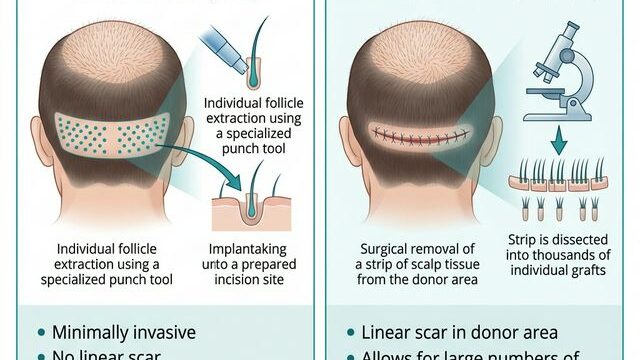
This process follows a predictable pattern mapped by the Norwood Scale. DHT doesn’t affect hair on the sides and back of the head (which is why hair transplants use hair from those areas).
DHT Blockers That Actually Work
1. Finasteride (Prescription) – Gold Standard
Evidence: ⭐⭐⭐⭐⭐ | DHT Reduction: ~70% | Price: $5–15/month
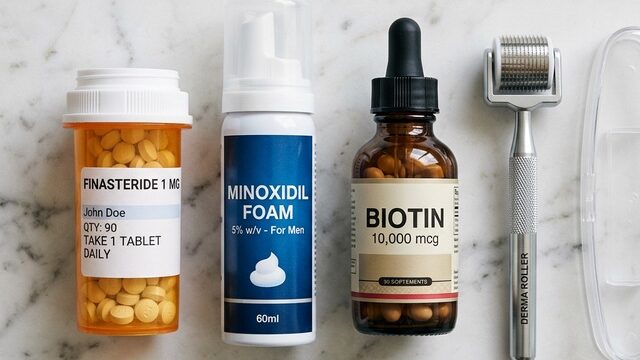
Finasteride is an FDA-approved oral medication that inhibits Type II 5-alpha reductase, reducing serum DHT by approximately 70%. It’s the most effective DHT blocker available and the standard of care for male pattern baldness.
Clinical results: 86% of men maintained or improved hair density after 2 years. 65% showed visible regrowth. It’s most effective when started early (Norwood 2–4).
Side effects: 2–4% of men experience sexual side effects (decreased libido, erectile changes). Most resolve after discontinuation. For the complete breakdown, see our finasteride guide.
2. Dutasteride (Prescription) – Stronger but Off-Label
Evidence: ⭐⭐⭐⭐⭐ | DHT Reduction: ~90% | Price: $10–20/month
Dutasteride inhibits both Type I and Type II 5-alpha reductase, reducing DHT by approximately 90% – significantly more than finasteride. It’s FDA-approved for prostate enlargement (BPH) but used off-label for hair loss. Studies show it produces more hair regrowth than finasteride, but with a higher side effect profile.
Who should consider it: Men who’ve been on finasteride for 12+ months without adequate results, under dermatologist supervision.
3. Topical Finasteride – Systemic DHT Reduction with Less Exposure
Evidence: ⭐⭐⭐⭐ | DHT Reduction: ~30–50% (systemic) | Price: $30–60/month
Topical finasteride (applied directly to the scalp) reduces scalp DHT effectively while producing less systemic DHT reduction than oral finasteride – theoretically lowering the risk of systemic side effects. Studies show comparable scalp DHT reduction to oral finasteride at standard doses. Available through compounding pharmacies and telehealth services.
4. Ketoconazole Shampoo (OTC) – Mild Topical DHT Blocker
Evidence: ⭐⭐⭐ | DHT Reduction: Mild (local only) | Price: $15–20
Ketoconazole (1–2%) has anti-androgenic properties and can reduce DHT activity at the scalp level when used as a shampoo 2–3 times per week. Not potent enough as a standalone treatment, but a solid addition to any protocol. The most effective OTC option for DHT-related hair loss. See our best hair growth products guide for top picks.
5. Saw Palmetto (Supplement) – Natural but Limited
Evidence: ⭐⭐ | DHT Reduction: Modest (~30%) | Price: $10–25/month
Saw palmetto is a natural 5-alpha reductase inhibitor derived from the berries of the Serenoa repens plant. Some studies show modest DHT reduction (~30%), and a few small clinical trials show mild hair improvement. However, the evidence is significantly weaker than for finasteride, with smaller study sizes and inconsistent results.
Realistic expectation: May slow progression slightly in early stages. Not a replacement for finasteride. Best as a supplement for men who refuse or can’t take prescription DHT blockers.
Comparison Table
| DHT Blocker | Type | DHT Reduction | Evidence | Price |
|---|---|---|---|---|
| Finasteride (oral) | Prescription | ~70% | ⭐⭐⭐⭐⭐ | ~$5–15/mo |
| Dutasteride (oral) | Prescription | ~90% | ⭐⭐⭐⭐⭐ | ~$10–20/mo |
| Topical finasteride | Prescription | ~30–50% | ⭐⭐⭐⭐ | ~$30–60/mo |
| Ketoconazole shampoo | OTC | Mild (local) | ⭐⭐⭐ | ~$15–20 |
| Saw palmetto | Supplement | ~30% | ⭐⭐ | ~$10–25/mo |
DHT Blockers That Don’t Work
Be cautious with products that claim to “block DHT naturally” without clinical evidence:
- Biotin – Good for hair health if deficient, but does NOT block DHT. Most people get sufficient biotin from diet alone.
- Pumpkin seed oil – One small study showed mild improvement, but evidence is insufficient to recommend it as a DHT blocker.
- Green tea extract – Has mild 5-alpha reductase inhibition in lab studies, but no clinical evidence of meaningful hair regrowth in humans.
- Caffeine shampoos – Caffeine stimulates hair growth through a different mechanism (not DHT blocking). Modest evidence for hair growth, but not a DHT blocker.
- Most “hair growth” supplements – Many contain vitamins, minerals, and herbs with no proven DHT-blocking activity. Read labels critically.
Frequently Asked Questions
Will blocking DHT regrow hair?
DHT blockers primarily prevent further loss and can produce moderate regrowth, especially in early stages. For significant regrowth, combine a DHT blocker with minoxidil (which stimulates growth through a different mechanism). The combination is more effective than either alone.
Do DHT blockers affect muscle growth?
Finasteride reduces DHT, not testosterone. Your testosterone levels remain the same (often slightly increase). DHT has minimal effect on muscle growth compared to testosterone, so finasteride should not meaningfully impact gym performance. For the creatine concern, see our article: does creatine cause hair loss?
Can women use DHT blockers?
Finasteride is generally not recommended for women, especially those of childbearing age, due to risk of birth defects. Women with hair loss typically use different treatment approaches (spironolactone, minoxidil). Always consult a dermatologist.
Related: Hair Loss Treatment Resources

Axel Lander is the founder and editor of ReadySleek. He publishes practical guides on men’s style, grooming, and fragrance, with a focus on clear comparisons, value, and the trade-offs readers should know before deciding.