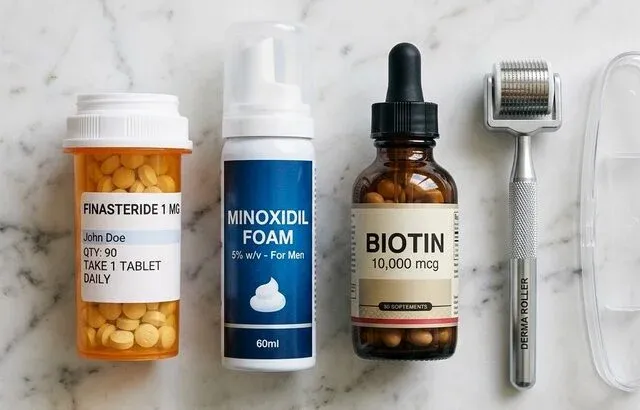
When it comes to hair loss, “natural” and “effective” rarely overlap. The internet is full of essential oil miracle cures, onion juice protocols, and scalp massage claims – most with zero clinical evidence. But some natural approaches do have legitimate science behind them, even if they’re significantly less powerful than FDA-approved treatments.
This guide separates natural hair loss remedies that have actual evidence from those that are pure placebo.
Natural Remedies With Actual Evidence
1. Saw Palmetto – Mild Natural DHT Blocker
Evidence: ⭐⭐⭐ | How it works: Inhibits 5-alpha reductase (same target as finasteride, but much weaker)
Saw palmetto is the most-studied natural DHT blocker. A 2020 meta-analysis found it can reduce hair loss and modestly improve density, though results are significantly less dramatic than finasteride. Think of it as “finasteride light” – about 30% the DHT reduction. Best for men in early stages who want a natural starting point before considering prescription options. See our complete DHT blockers guide.
Dosage: 320mg standardized extract daily. Check price on Amazon
2. Scalp Massage – Increases Blood Flow & May Stimulate Growth
Evidence: ⭐⭐⭐ | How it works: Mechanical stretching of follicular cells; increased blood flow
A 2016 study in ePlasty found that 4 minutes of daily scalp massage over 24 weeks increased hair thickness. The mechanical force appears to stretch follicular cells, activating genes that promote hair growth. It’s free, has zero side effects, and appears to provide a small but real benefit.
Protocol: 4–10 minutes daily with medium pressure using fingertips (not nails). Focus on thinning areas. Can be done in the shower or while watching TV.
3. Pumpkin Seed Oil – Mild DHT Inhibitor
Evidence: ⭐⭐ | How it works: Contains beta-sitosterol, a mild 5-alpha reductase inhibitor
A 2014 randomized controlled trial found that men taking 400mg of pumpkin seed oil daily for 24 weeks showed a 40% increase in hair count vs. 10% for placebo. Promising but limited – only one major study, small sample size (76 men). Worth adding to a multi-approach protocol.
Dosage: 400mg daily. Check price on Amazon
4. Rosemary Oil – Topical Growth Stimulant
Evidence: ⭐⭐⭐ | How it works: Anti-inflammatory, increases blood flow, possible mild anti-androgenic activity
A 2015 study published in SKINmed compared rosemary oil to 2% minoxidil. After 6 months, both groups showed similar improvement in hair count. Important caveats: this was a small study (100 participants), used only 2% minoxidil (not the standard 5%), and hasn’t been replicated at this scale.
How to use: Mix 5–10 drops of rosemary essential oil with a carrier oil (jojoba, coconut). Massage into scalp, leave for 30+ minutes, then rinse. Or add 5 drops to your shampoo. Do NOT apply undiluted essential oil directly to scalp.
5. Marine Collagen & Biotin – Nutritional Support
Evidence: ⭐⭐ | How it works: Provides building blocks for hair growth (if deficient)
Biotin (Vitamin B7) and collagen are popular hair supplements, but their effectiveness depends on whether you have a deficiency. Biotin deficiency does cause hair loss – supplementing corrects it. But most people get enough biotin from diet, making supplementation unnecessary for most men.
Marine collagen supports overall hair structure and may improve hair quality (thickness, shine). Evidence for preventing androgenetic alopecia is weak.
Only supplement if: You have diagnosed deficiencies, a restricted diet (vegan/vegetarian), or poor nutrition.
Natural Remedies That DON’T Work
- Onion juice – One tiny study showed potential for alopecia areata (not pattern baldness). Smells terrible, no evidence for androgenetic alopecia.
- Coconut oil – Excellent for preventing hair breakage and conditioning, but does nothing for follicle miniaturization. Won’t prevent or reverse pattern baldness.
- Egg masks – Protein can strengthen existing hair but cannot regrow lost hair. Messy, smelly, and ultimately cosmetic only.
- Aloe vera – Good for scalp inflammation and moisturizing. No evidence for hair regrowth.
- Castor oil – Despite massive social media hype, there is zero clinical evidence that castor oil promotes hair growth. It can moisturize hair and scalp, but it won’t regrow hair.
- Caffeine shampoo – Caffeine stimulates follicles in lab studies, but the concentration in shampoos (applied for 2–3 minutes then rinsed) is insufficient for meaningful clinical impact.
The Reality Check
Here’s the honest comparison:
| Approach | Expected Result | Evidence |
|---|---|---|
| Finasteride + Minoxidil | 86% maintain/improve; visible regrowth | ⭐⭐⭐⭐⭐ |
| Best natural protocol | Possible slowing; mild improvement | ⭐⭐⭐ |
| Social media “natural cures” | Mostly placebo | ⭐ |
Natural remedies can be part of a hair loss strategy, but they are not a replacement for proven medical treatments. The most effective approach combines FDA-approved treatments with natural supports. For a complete treatment breakdown by stage, see our complete hair loss guide.
Frequently Asked Questions
Can natural remedies reverse hair loss?
For androgenetic alopecia (male pattern baldness), natural remedies alone are unlikely to produce significant reversal. They may slow progression slightly and support overall hair health, but finasteride and minoxidil remain far more effective. For hair loss caused by nutritional deficiencies or stress, natural approaches (correcting the deficiency, stress management) can be very effective.
Is there a natural alternative to finasteride?
Saw palmetto is the closest natural alternative, but it blocks roughly 30% of DHT vs. finasteride’s 70%. For men who refuse prescription medication, a protocol of saw palmetto + rosemary oil + scalp massage + minoxidil (OTC) is the best non-prescription approach.
How long do natural remedies take to work?
Most natural approaches require 3–6 months of consistent daily use to see any results. This is similar to medical treatments. If you don’t see improvement after 6 months of consistent use, the remedy likely isn’t effective for your situation.

Ready Sleek founder. Obsessed with casual style and the minimalist approach to building a highly functional wardrobe. Also a fan of classic, vintage hairstyles.