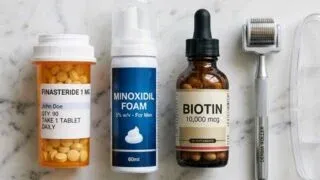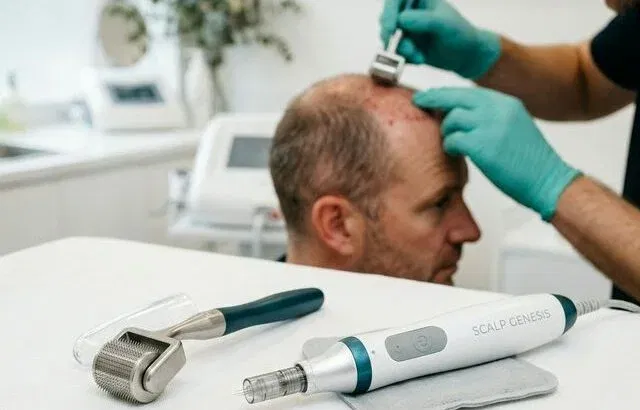
Microneedling — also called derma rolling or collagen induction therapy — has become one of the most talked-about hair loss treatments. Unlike medications, it works mechanically: tiny needles create controlled micro-injuries in the scalp, triggering your body’s natural wound-healing response. But does it actually regrow hair? The science is surprisingly encouraging.
How Microneedling Works for Hair Loss
When microneedles puncture the scalp, three things happen: Stem cell activation — the micro-injuries stimulate dormant stem cells in hair follicles. Growth factor release — your body floods the area with platelet-derived growth factor (PDGF), vascular endothelial growth factor (VEGF), and other compounds that promote hair growth. Increased blood flow — the healing process brings more nutrient-rich blood to follicles. Additionally, microneedling creates microscopic channels that dramatically improve the absorption of topical treatments like minoxidil — by up to 5x according to some studies.
What the Research Says
| Study | Protocol | Result |
|---|---|---|
| Dhurat et al. (2013) | 1.5mm roller weekly + minoxidil vs minoxidil alone | 4x more hair count increase in microneedling group |
| Fertig et al. (2018) | Review of 22 studies on microneedling + hair loss | Consistent positive results across all studies reviewed |
| Faghihi et al. (2020) | 0.6mm microneedling + minoxidil vs minoxidil alone | Significant improvement in hair density and thickness |
| English & Barazesh (2019) | Microneedling alone (no minoxidil) | Modest improvement — better results when combined with topicals |
The takeaway: microneedling works best in combination with minoxidil. The landmark Dhurat study showed that men using both had a 4x greater improvement in hair count compared to minoxidil alone after 12 weeks. Even on its own, microneedling shows modest benefits, but the real power is as an amplifier for other treatments.
How to Microneedle for Hair Loss: Step-by-Step
Choosing Your Device
| Device | Needle Length | Best For | Price |
|---|---|---|---|
| Derma Roller | 0.5-1.5mm | Beginners — affordable and simple | $10-25 |
| Derma Stamp | 0.5-1.5mm | Targeted areas (temples, crown) | $15-30 |
| Derma Pen (automated) | 0.25-2.5mm (adjustable) | Serious users — consistent depth, less pain | $60-200 |
| Professional treatment | 1.0-2.5mm | Maximum results under medical supervision | $200-500/session |
The Protocol
Frequency: Once per week (1.0-1.5mm) or twice per week (0.5mm). Your scalp needs 5-7 days to heal between sessions. Needle depth: 1.0-1.5mm is the sweet spot for hair regrowth — deep enough to stimulate stem cells but shallow enough for home use. Before: Clean the device with rubbing alcohol. Part your hair to expose the scalp. During: Roll or stamp across the thinning area with moderate pressure. Cover each area 3-4 times in different directions (horizontal, vertical, diagonal). You should feel prickling but not severe pain. Mild bleeding (pinpoint dots) is normal and expected at 1.0mm+. After: Wait 24 hours before applying minoxidil (to avoid irritation). Don’t wash hair for 4-6 hours. Replace derma rollers every 8-10 uses (needles dull).
Microneedling + Minoxidil: The Best Stack
The most evidence-backed protocol combines weekly microneedling with daily minoxidil. On microneedling days, do your session in the morning and skip minoxidil until the next day (24-hour gap). On all other days, apply minoxidil as directed (typically twice daily). This gives your scalp healing time while maximizing the enhanced-absorption benefit on subsequent minoxidil applications. For an even stronger approach, add a DHT blocker like finasteride or saw palmetto — this addresses the root cause (DHT) while microneedling + minoxidil stimulate growth.
Realistic Timeline
Weeks 1-4: Possible increased shedding (normal — weak hairs making way for stronger ones). Months 2-3: Reduced shedding, some peach fuzz in thinning areas. Months 3-6: Visible improvement in hair density and thickness. Months 6-12: Maximum results achieved. Maintenance sessions (every 2 weeks) recommended to sustain gains.
Frequently Asked Questions
Does microneedling hurt?
At 0.5mm, you’ll feel mild prickling. At 1.0-1.5mm, it’s uncomfortable but tolerable — similar to getting a tattoo. The scalp is less sensitive than the face. Automated derma pens are generally less painful than rollers because the needles go straight in rather than entering at an angle.
Can microneedling make hair loss worse?
Temporary shedding in weeks 1-4 is common and actually a positive sign. However, over-aggressive microneedling (too deep, too frequent, or on irritated/infected skin) can cause scarring. Stick to the recommended protocol: 1.0-1.5mm maximum depth, once per week, with clean equipment.
Related Articles
- DHT Blockers: Do They Actually Work?
- Natural Hair Loss Remedies for Men
- Finasteride vs Minoxidil
- Best Hair Growth Products for Men
- Norwood Scale: Identify Your Stage

Axel is the founder of ReadySleek and has spent over 5 years researching and testing men’s grooming products, skincare routines, and hair loss treatments. His work combines hands-on product testing with insights from dermatologists and trichologists to deliver evidence-based grooming advice.
He specializes in men’s skincare (including ingredient analysis of retinol, niacinamide, and SPF), hair loss science (minoxidil, finasteride, hair transplants), men’s fragrance (with 80+ colognes personally tested), and body grooming techniques.
When he’s not reviewing the latest grooming products, Axel focuses on making complex grooming topics accessible and actionable for everyday guys.