Losing hair in your 20s feels like it shouldn’t be happening. But it’s far more common than you think – approximately 20% of men experience noticeable hair loss by age 20, and 25% by age 25. The good news: catching it early gives you the best chance of keeping your hair, because treatments are most effective when started before significant loss has occurred.
Is It Actually Hair Loss?
Before panicking, distinguish between normal hair behavior and actual hair loss:
Normal (not hair loss):
- Losing 50–100 hairs daily (everyone does)
- Noticing hairs on your pillow or in the shower (normal shedding)
- A mature hairline – your hairline naturally moves up slightly from your teenage “juvenile” hairline during your late teens/early 20s. This is NOT balding
Signs of actual hair loss:
- Recession at temples beyond a typical mature hairline
- Visible thinning at the crown when viewed from above
- More scalp visible through hair than 6–12 months ago
- Miniaturized hairs (thin, short, light-colored) mixed with normal hairs
- Family history of male pattern baldness (father, grandfather, maternal grandfather)
Use the Norwood Scale to identify your current stage. Most men in their 20s are between Norwood 1–3 – the ideal window for treatment.
Why You’re Losing Hair at 20
1. Androgenetic Alopecia (Most Likely)
Male pattern baldness is the cause in 95%+ of cases. It’s genetic – inherited sensitivity to DHT causes follicle miniaturization. If your father or maternal grandfather lost hair early, you’re at higher risk. DHT sensitivity can activate as early as 18–20. See our DHT blockers guide.
2. Telogen Effluvium (Stress Shedding)
Severe stress, illness, dramatic weight loss, or nutritional deficiency can push a large number of hairs into the resting (telogen) phase simultaneously, causing widespread shedding 2–3 months after the trigger. Common in college-age men facing academic stress, poor diet, or significant life changes. Usually reversible once the trigger is addressed.
3. Nutritional Deficiencies
Common in young men with poor diets: iron deficiency, vitamin D deficiency, zinc deficiency, and inadequate protein intake can all contribute to hair thinning. College diets heavy on processed food and low on vegetables are a frequent culprit. A blood test from your doctor can identify deficiencies quickly.
4. Other Causes
- Thyroid disorders – Both hypothyroidism and hyperthyroidism cause diffuse hair thinning
- Alopecia areata – Autoimmune condition causing round, patchy bald spots. Different from pattern baldness
- Medications – Some acne medications, antidepressants, and performance-enhancing drugs can cause hair loss
- Traction alopecia – From tight hairstyles (man buns, tight braids) pulling on hair follicles. See our hat and hair loss myth article
Treatment Plan for Your 20s
Early intervention is your biggest advantage. Treatments work best when hair follicles are miniaturized but not yet dead.
Step 1: Start Minoxidil 5% (OTC)
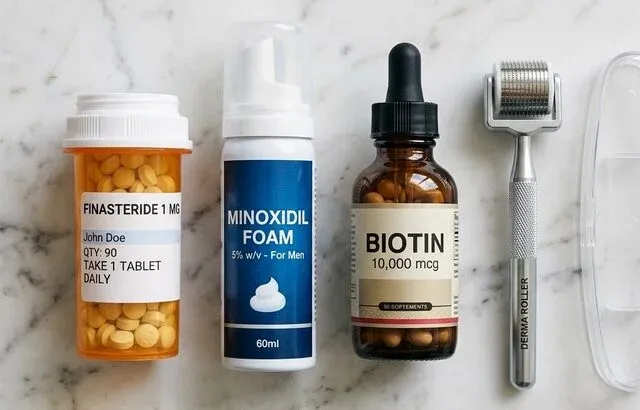
Available without prescription. Apply twice daily to thinning areas. Expect initial shedding (weeks 2–6), then improvement at 3–6 months. This should be your first step – zero barrier to entry. See our complete minoxidil guide.
Step 2: See a Dermatologist
Get a professional diagnosis. A dermatologist can confirm androgenetic alopecia, rule out other causes, and prescribe finasteride if appropriate. Telehealth services make this easy and affordable ($20–40 for a consultation).
Step 3: Consider Finasteride
The most effective treatment for pattern baldness. Blocks ~70% of DHT. For young men, starting finasteride early can prevention tips decades of hair loss. Side effects affect 2–4%. See our finasteride vs minoxidil comparison.
Step 4: Add Microneedling + Ketoconazole
For maximum results, add weekly microneedling (1.0–1.5mm) and ketoconazole shampoo 2–3x/week. This creates the most comprehensive non-surgical protocol available.
Frequently Asked Questions
Am I too young for finasteride?
Finasteride is FDA-approved for men 18+. Many dermatologists prescribe it to men in their early 20s with confirmed androgenetic alopecia. Starting early is actually ideal because it prevents loss that’s harder to reverse later. Discuss concerns about side effects with your dermatologist.
Will my hair loss get worse?
Without treatment, yes. Androgenetic alopecia is progressive. The rate varies – some men lose hair rapidly over 5–10 years, others gradually over decades. Treatment can slow it dramatically (finasteride stops progression in 86% of men) or even reverse early-stage loss.
Should I just shave it?
That’s a valid option if hair loss doesn’t bother you. Many men look great bald. But if you’d prefer to keep your hair, starting treatment in your 20s gives you the best possible outcome. You can always shave later if treatment isn’t satisfactory – but you can’t easily recover hair follicles lost to years of untreated DHT damage. For the full overview, see our complete hair loss guide.

Ready Sleek founder. Obsessed with casual style and the minimalist approach to building a highly functional wardrobe. Also a fan of classic, vintage hairstyles.