The supplement industry is worth $50 billion and 90% of it is marketing hype. Most men are either taking supplements they don’t need or missing the ones they actually do. This evidence-based guide cuts through the noise: here are the supplements that actually work for men, backed by clinical research — and the ones you’re wasting money on.
Supplements That Actually Work for Men
| Supplement | What It Does | Evidence | Who Needs It | Daily Dose |
|---|---|---|---|---|
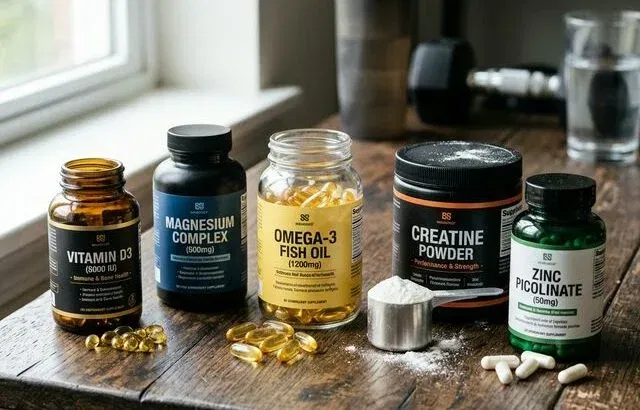
| Vitamin D3 | Bone health, immune function, testosterone | ⭐⭐⭐⭐⭐ Strong | Most men (especially if indoors) | 2,000-5,000 IU |
| Magnesium | Sleep, muscle function, testosterone | ⭐⭐⭐⭐⭐ Strong | Most men (~50% are deficient) | 200-400mg |
| Omega-3 (Fish Oil) | Heart, brain, inflammation | ⭐⭐⭐⭐ Strong | Men who don’t eat fish 2x/week | 1-2g EPA+DHA |
| Creatine Monohydrate | Muscle strength, performance, brain | ⭐⭐⭐⭐⭐ Very Strong | All active men | 3-5g daily |
| Zinc | Testosterone, immune, prostate | ⭐⭐⭐⭐ Strong | Men with low T or frequent illness | 15-30mg |
| Vitamin K2 | Calcium absorption, heart health | ⭐⭐⭐ Good | Anyone taking Vitamin D | 100-200mcg MK-7 |
Supplements You’re Wasting Money On
| Supplement | Claim | Reality |
|---|---|---|
| BCAAs | Build muscle faster | Useless if you eat enough protein (0.7g/lb). Complete waste of money. |
| Testosterone boosters | Boost testosterone naturally | Most use herbs with weak/no evidence. Tribulus, fenugreek, ashwagandha show marginal effects at best. |
| Multivitamins | Cover all nutritional bases | If your diet is remotely reasonable, you’re already getting most nutrients. Individual supplements are more targeted and effective. |
| Glutamine | Muscle recovery | Your body makes enough. Extra supplementation shows no benefit in studies. |
| CLA | Fat burning | Effects are so small they’re practically zero in real-world use. |
The Only 3 Supplements Most Men Need
If you want to keep it simple and cost-effective, these three cover the biggest nutritional gaps in the average man’s diet: 1. Vitamin D3 (2,000-5,000 IU/day) — 42% of Americans are deficient. Supports testosterone, immune function, bone health, and mood. Take with a meal containing fat for absorption. 2. Magnesium Glycinate (200-400mg before bed) — Improves sleep quality, reduces muscle cramps, supports 300+ enzymatic reactions in the body. The glycinate form is best absorbed and least likely to cause digestive issues. 3. Omega-3 Fish Oil (1-2g EPA+DHA/day) — Anti-inflammatory, cardiovascular protection, brain health. Most men don’t eat enough fatty fish. Total cost: about $30-40/month for all three.
Frequently Asked Questions
When should I take my supplements?
Fat-soluble vitamins (D3, K2, Omega-3) should be taken with a meal containing fat for better absorption. Magnesium is best taken before bed as it promotes relaxation and sleep. Creatine can be taken at any time — timing doesn’t matter, consistency does. Zinc should be taken with food to prevent nausea, and avoid taking it at the same time as calcium or iron (they compete for absorption).
Do I need a multivitamin?
Probably not. If you eat a reasonably varied diet (fruits, vegetables, protein, whole grains), you’re getting most essential vitamins. Multivitamins use cheap, poorly absorbed forms of each nutrient and provide doses that are often too low to make a meaningful difference. Individual supplements targeted to your specific deficiencies (most commonly D3 and Magnesium) are more effective and often cheaper.
Related Articles

Axel is the founder of ReadySleek and has spent over 5 years researching and testing men’s grooming products, skincare routines, and hair loss treatments. His work combines hands-on product testing with insights from dermatologists and trichologists to deliver evidence-based grooming advice.
He specializes in men’s skincare (including ingredient analysis of retinol, niacinamide, and SPF), hair loss science (minoxidil, finasteride, hair transplants), men’s fragrance (with 80+ colognes personally tested), and body grooming techniques.
When he’s not reviewing the latest grooming products, Axel focuses on making complex grooming topics accessible and actionable for everyday guys.