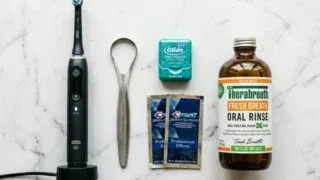
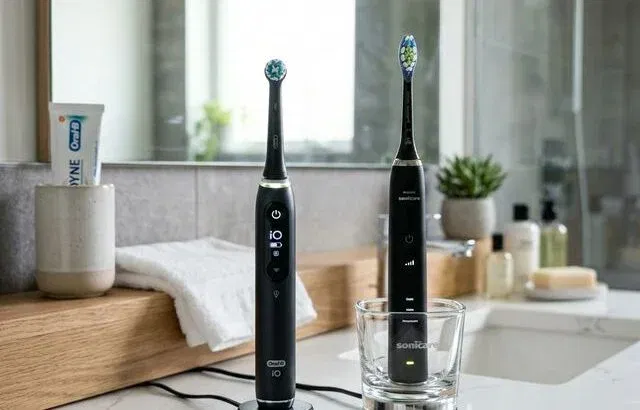
An electric toothbrush is the single biggest upgrade you can make to your oral care routine. Studies consistently show they remove 21% more plaque than manual brushing. The built-in timer ensures you brush the full 2 minutes. Pressure sensors prevent overbrushing. Here’s the breakdown of the best electric toothbrushes for men in 2025.
Best Electric Toothbrushes: Top Picks
| Product | Price | Type | Battery | Best For |
|---|---|---|---|---|
| Oral-B iO Series 9 | $300 | Oscillating | 14 days | Best overall — AI tracking, 7 modes, premium feel |
| Philips Sonicare 4100 | $50 | Sonic | 14 days | Best value — excellent cleaning at entry price |
| Oral-B Pro 1000 | $50 | Oscillating | 7 days | Best budget oscillating — proven technology |
| Philips Sonicare DiamondClean | $180 | Sonic | 14 days | Best premium sonic — sleek design, 5 modes |
| Quip Smart | $45 | Sonic | 3 months (AAA) | Best for travel — slim, subscription model |
| Oral-B iO Series 4 | $100 | Oscillating | 10 days | Best mid-range — iO technology at lower price |
Sonic vs Oscillating: Which Is Better?
| Factor | Sonic (Sonicare) | Oscillating (Oral-B) |
|---|---|---|
| Action | Vibrates side-to-side at 31,000+ strokes/min | Rotates + oscillates at 8,800 movements/min |
| Cleaning | Broader sweep, fluid dynamics clean beyond bristles | Precise, cup-shaped head wraps around each tooth |
| Sensitivity | Gentler on gums and enamel | More aggressive — better with pressure sensor |
| Feel | Buzzing vibration (quieter) | Rotating/pulsing (more tactile) |
| Studies | Both effective; slight edge for gum health | Both effective; slight edge for plaque removal |
The honest answer: Both are significantly better than manual brushing. The difference between sonic and oscillating is marginal compared to the difference between electric and manual. Choose based on feel preference — try both if possible.
What Features Actually Matter
2-minute timer (essential): Every electric toothbrush should have this. If yours doesn’t, upgrade. Pressure sensor (very useful): Warns you when brushing too hard. Prevents gum recession and enamel damage. Multiple modes (nice to have): Sensitive, deep clean, whitening modes are useful but not essential. Most people stick to one mode. Smart features/app (unnecessary): Bluetooth connectivity and AI tracking are fun but don’t improve cleaning. The basic brush does the actual work. Brush head compatibility (practical): Oral-B and Sonicare both have wide brush head ecosystems. Replacement heads cost $5-10 each; replace every 3 months.
Frequently Asked Questions
How often should I replace the brush head?
Every 3 months, or sooner if bristles are frayed. Some brush heads have indicator bristles that fade when it’s time to replace. Using a worn brush head negates the advantage of electric brushing — the bristles can’t make proper contact with tooth surfaces.
Is a $300 electric toothbrush worth it over a $50 one?
For cleaning ability alone, no. A $50 Oral-B Pro 1000 or Sonicare 4100 removes plaque just as effectively as a $300 model. The premium models add convenience features (smart pressure sensors, more modes, longer battery, premium materials) but the core cleaning performance is nearly identical. Start with a $50 model and upgrade later if you want the premium features.
Related Articles

Axel is the founder of ReadySleek and has spent over 5 years researching and testing men’s grooming products, skincare routines, and hair loss treatments. His work combines hands-on product testing with insights from dermatologists and trichologists to deliver evidence-based grooming advice.
He specializes in men’s skincare (including ingredient analysis of retinol, niacinamide, and SPF), hair loss science (minoxidil, finasteride, hair transplants), men’s fragrance (with 80+ colognes personally tested), and body grooming techniques.
When he’s not reviewing the latest grooming products, Axel focuses on making complex grooming topics accessible and actionable for everyday guys.