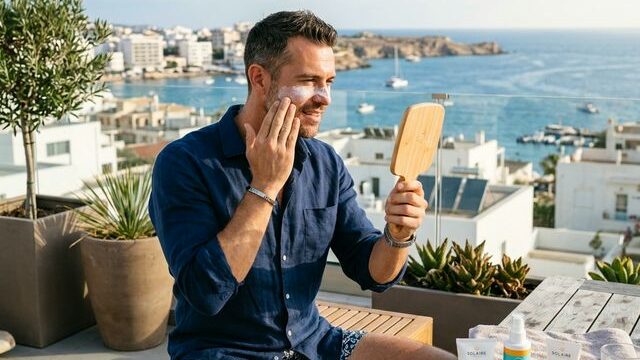
Sunscreen is the single most effective anti-aging product you can use — more effective than retinol, vitamin C, and every $200 serum combined. Yet only 14% of men use sunscreen daily. UV damage causes 90% of visible skin aging (wrinkles, dark spots, sagging), and skin cancer rates are 2x higher in men than women. Here’s why SPF isn’t optional, and how to make it effortless.
The Science: What UV Does to Your Skin
UVA rays (320-400nm): Penetrate deep into the dermis. Break down collagen and elastin — causing wrinkles, sagging, and premature aging. Pass through windows and clouds. Present year-round, even in winter. UVB rays (280-320nm): Affect the epidermis (surface layer). Cause sunburn and direct DNA damage leading to skin cancer. Strongest between 10am-4pm and in summer. The cumulative effect: Sun damage accumulates over your lifetime. A study comparing a truck driver’s sun-exposed side of his face versus the protected side showed 20+ years of visible aging difference. Daily SPF prevents this cumulative damage from building up.
Best Sunscreens for Men (That You’ll Actually Wear)
| Product | SPF | Type | Price | Why It Works for Men |
|---|---|---|---|---|
| EltaMD UV Clear SPF 46 | 46 | Chemical | ~$35-40 | No white cast, oil-free, niacinamide, dermatologist #1 pick |
| La Roche-Posay Anthelios Fluid SPF 50 | 50 | Chemical | ~$25-30 | Ultra-light, invisible, mattifying |
| Supergoop Unseen Sunscreen SPF 40 | 40 | Chemical | ~$22-36 | Completely invisible, doubles as primer |
| CeraVe Hydrating Mineral SPF 30 | 30 | Mineral | ~$14-17 | Budget pick, sensitive skin, slight tint |
| Neutrogena Ultra Sheer SPF 70 | 70 | Chemical | ~$10-12 | Dirt cheap, available everywhere, lightweight |
How to Use Sunscreen Properly
Amount: Two finger-lengths (or approximately 1/4 teaspoon) for your face and neck. Most men dramatically under-apply. When: Every single morning as the last step of your skincare routine, before leaving the house. Yes, even on cloudy days (80% of UV penetrates clouds). Yes, even in winter. Yes, even if you “only go outside for 5 minutes.” Reapply: Every 2 hours of sun exposure, or immediately after sweating or swimming. For office workers who go outside briefly, morning application is typically sufficient. Where: Face, neck, ears, and any exposed scalp. Bald or thinning men — your scalp is critically exposed and needs SPF too.
Chemical vs Mineral: Which Type?
Chemical sunscreens (avobenzone, octisalate) absorb UV rays before they penetrate skin. They’re invisible, lightweight, and comfortable — most men prefer these for daily wear. Mineral sunscreens (zinc oxide, titanium dioxide) sit on top of the skin and physically reflect UV rays. They’re better for very sensitive/acne-prone skin but can leave a white cast on darker skin tones. For most men, a chemical SPF 30-50 with a lightweight formula is the best daily option.
Frequently Asked Questions
Is SPF 30 enough?
For daily use, yes. SPF 30 blocks 97% of UVB rays, SPF 50 blocks 98%. The difference is marginal. What matters more is applying enough and reapplying when needed. An SPF 30 you actually use daily is infinitely better than SPF 100 sitting in your drawer.
Does sunscreen cause acne?
Some can — look for “non-comedogenic” and “oil-free” on the label. EltaMD UV Clear is specifically designed for acne-prone skin (contains niacinamide which actually helps acne). Avoid thick, greasy formulas. Gel and fluid textures are best for oily and acne-prone skin types.
Related Articles
- Best Sunscreen for Men
- Vitamin C Serum: Morning UV Defense
- Retinol for Men: Anti-Aging Guide
- Anti-Aging: When to Start
- Men’s Skincare Routine Guide

Axel Lander is the founder and editor of ReadySleek. He publishes practical guides on men’s style, grooming, and fragrance, with a focus on clear comparisons, value, and the trade-offs readers should know before deciding.