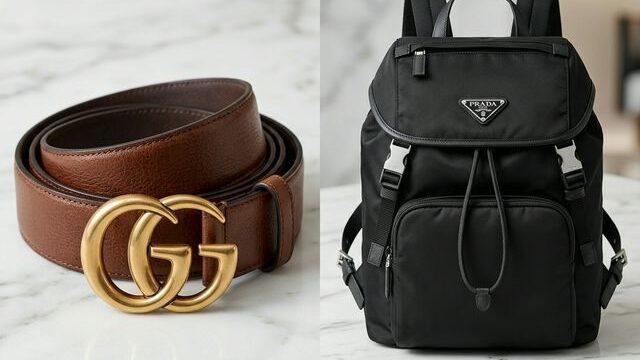
Gucci and Prada are two of the most powerful luxury houses in men’s fashion. Both are Italian, both are globally iconic, and both command premium prices. But they represent fundamentally different approaches to luxury menswear.
The Short Answer
Gucci is bold, maximalist, and instantly recognizable — luxury that wants to be seen. Prada is intellectual, minimalist, and subtly sophisticated — luxury that doesn’t need to shout. Choose Gucci if you want statement pieces; choose Prada if you value understated sophistication.
Full Comparison
| Feature | Gucci | Prada |
|---|---|---|
| Founded | 1921 (Florence) | 1913 (Milan) |
| Owner | Kering Group | Prada Group |
| Aesthetic | Bold, maximalist, eclectic | Minimalist, intellectual, clean |
| Logo Visibility | Prominent (GG monogram, Web stripe) | Subtle (triangle logo, text logo) |
| T-Shirt Price | ~$500–$900 | ~$400–$700 |
| Sneaker Price | ~$600–$1,200 | ~$700–$1,100 |
| Bag Price | ~$800–$3,000+ | ~$1,000–$3,500+ |
| Known Men’s Items | Ace sneakers, GG belt, loafers | Re-Nylon line, Cloudbust sneakers |
| Cultural Positioning | Celebrity, hip-hop, streetwear | Fashion insiders, art world, tech |
| Resale Value | High (especially belts, bags) | High (especially nylon pieces) |
Quality and Craftsmanship
Both brands deliver exceptional quality suited to their price points. Gucci uses premium Italian leathers, silk linings, and meticulous hardware — their horsebit loafers and leather goods are benchmark quality. Prada pairs traditional craftsmanship with innovative materials — their Re-Nylon line uses regenerated ECONYL nylon, and their leather work rivals any luxury house.
In terms of raw quality per dollar, Prada may offer slightly more refined construction and materials at similar price points. Gucci’s prices partially reflect brand heat and cultural capital rather than materials alone.
Style Philosophy
Gucci is about self-expression and visual impact. Bold prints, GG monograms, bright colors, and eclectic design mixing. Under Alessandro Michele (2015–2022) and now Sabato De Sarno, Gucci has balanced maximalism with a more refined, romantic Italian aesthetic.
Prada is about intellectual fashion. Miuccia Prada and Raf Simons (co-creative director until 2023) created fashion that challenges expectations — ugly-beautiful, minimalist but thoughtful, technically innovative. Prada appeals to people who see clothing as art rather than accessories.
Which Should You Buy?
Choose Gucci if:
- You want instantly recognizable luxury
- You love bold, statement-making pieces
- You value cultural relevance and celebrity association
- You want entry-level luxury accessories (belts, scarves)
Choose Prada if:
- You prefer understated, intellectual luxury
- You value innovation in materials and design
- You want timeless pieces that don’t follow trends
- You see fashion as an expression of ideas, not just status
Frequently Asked Questions
Is Gucci or Prada more expensive?
They’re comparable. Gucci tends to be slightly more expensive on accessories and casualwear (belts, sneakers, t-shirts). Prada can be pricier on bags and outerwear. Both occupy the same luxury tier, with most items ranging from $400 to $3,000+.
Which brand holds value better?
Both hold resale value well. Gucci belts and bags have strong secondary market demand. Prada’s Re-Nylon line and triangle logo bags also retain significant value. Classic, logo-driven pieces from either brand depreciate less than trend-driven items.

Axel Lander is the founder and editor of ReadySleek. He publishes practical guides on men’s style, grooming, and fragrance, with a focus on clear comparisons, value, and the trade-offs readers should know before deciding.