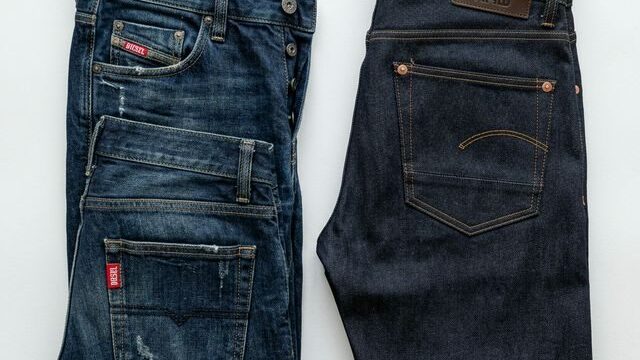
Diesel and G-Star Raw are two of Europe’s most respected premium denim brands. Both offer unique approaches to jeans design — Diesel through Italian fashion innovation, G-Star through Dutch engineering precision. Here’s how they compare in 2025.
The Short Answer
Diesel offers better materials, softer denim, and more fashion-forward washes — it’s the style-first denim brand. G-Star Raw focuses on raw denim, architectural engineering, and a more utilitarian aesthetic — it’s the technical denim brand. Both are premium, but Diesel currently has the stronger quality reputation.
Head-to-Head Comparison
| Feature | Diesel | G-Star Raw |
|---|---|---|
| Founded | 1978 (Italy) | 1989 (Netherlands) |
| Price Range | ~$150–$400 | ~$120–$300 |
| Denim Style | Fashion-forward, washed, distressed | Raw, minimal, architectural |
| Denim Feel | Soft, comfortable, stretch | Stiffer, develops character over time |
| Materials | Premium cotton blends + elastane | Organic cotton, raw selvedge |
| Fit Options | Skinny, slim, straight, tapered | Slim, tapered, 3D engineered |
| Best Known For | Sleenker, Krooley, Larkee | Revend, 3301, Arc |
| Aesthetic | Italian luxury casual, edgy | Military-inspired, modern utility |
| Hardware | Premium metal rivets, branded buttons | Copper rivets, raw detailing |
| Sustainability | Growing (Diesel For Responsible Living) | Strong (Raw Denim philosophy, GOTS certified) |
Denim Quality
Diesel consistently uses premium cotton blends with elastane for stretch and comfort. Their denim is softer out of the box and features reinforced stitching with quality hardware. Diesel’s washes — from dark indigo to heavily distressed — are industry-leading. The jeans feel premium from the first wear.
G-Star Raw traditionally focused on raw, untreated denim that develops unique fading patterns with wear. Their 3D denim engineering creates ergonomic cuts that follow the body’s natural shape. However, recent customer feedback suggests inconsistent quality — some buyers report rougher denim and quicker wear-out compared to earlier G-Star products.
Style and Design
Diesel is the fashion-first choice. Their designs are bolder, with more variety in washes, distressing, and detailing. If you want jeans that make a statement, Diesel delivers.
G-Star Raw takes a more understated, technical approach. Their jeans have a modern, utilitarian look — clean lines, minimal branding, and innovative construction. The Elwood and Arc models feature 3D-cut articulated knees that give a distinctive silhouette.
Which Should You Buy?
Choose Diesel if:
- You want the softest, most comfortable premium denim
- You prefer fashion-forward design and washes
- You want versatile jeans for both casual and dressed-up occasions
- You value Italian craftsmanship and luxury detailing
Choose G-Star Raw if:
- You want raw denim that develops character over time
- You prefer utilitarian, engineering-driven design
- You value sustainability in denim production
- You want innovative 3D-cut jeans
Frequently Asked Questions
Are Diesel jeans worth the price?
Yes, for the quality tier they occupy. Diesel jeans use premium materials, feature excellent construction, and offer unique washes that cheaper brands can’t replicate. They typically last 3–5 years with regular wear, even with daily rotation.
Has G-Star Raw quality declined?
Some longtime customers report that recent G-Star Raw jeans feel rougher and less durable than earlier products. While they still offer good value, the quality gap between G-Star and competitors like Diesel has narrowed in Diesel’s favor over recent years.

Axel Lander is the founder and editor of ReadySleek. He publishes practical guides on men’s style, grooming, and fragrance, with a focus on clear comparisons, value, and the trade-offs readers should know before deciding.