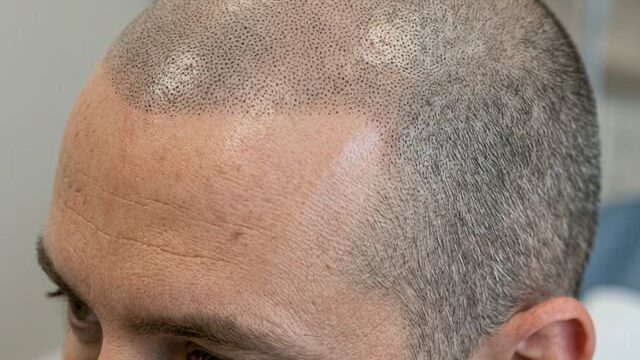
Scalp micropigmentation (SMP) is the fastest-growing non-surgical hair loss solution in the world. It creates the appearance of a full, closely-shaved head of hair by depositing tiny pigment dots across the scalp — essentially a highly specialized tattoo that replicates the look of real hair follicles.
Unlike a hair transplant, SMP doesn’t regrow hair. Instead, it creates the illusion of density, making thinning areas look fuller or a bald head look like a fresh buzz cut.
How Scalp Micropigmentation Works
SMP uses a fine-point needle to deposit specialized pigment into the upper dermis of the scalp. Each deposit creates a tiny dot that mimics a hair follicle.
Key details:
- Needle size: Much finer than tattoo needles (1–3 point configurations)
- Pigment: Specifically formulated for scalp skin — does NOT use tattoo ink (which fades to blue/green)
- Depth: Deposited into the dermal-epidermal junction (shallower than tattoos)
- Sessions: Typically 2–3 sessions, each lasting 2—4 hours
- Spacing: Sessions are 7–14 days apart
Who Is SMP Best For?
Ideal Candidates
- Norwood 5–7 men who want the “shaved head” look without the shine (check your stage with our Norwood Scale guide)
- Men with diffuse thinning who want to add the appearance of density
- Hair transplant patients who want to camouflage FUT scars or add density between grafts
- Men who want the buzz cut look but have significant hair loss
- Alopecia areata patients with patchy hair loss
Not Ideal For
- Men who want to grow their hair long (SMP looks best with very short hair)
- Very pale skin with dark hair (contrast can look unnatural if not done by an expert)
- Active scalp conditions (psoriasis, severe dermatitis)
Cost of Scalp Micropigmentation (2026)
| Area | Sessions | Cost Range (US) |
|---|---|---|
| Full head | 2–3 | ~$2,000–$4,000 |
| Crown only | 2 | ~$1,200–$2,000 |
| Hairline only | 2 | ~$1,500–$2,500 |
| Scar camouflage (FUT) | 1–2 | ~$800–$1,500 |
| Touch-up (after 4–6 years) | 1 | ~$500–$1,000 |
Compared to a hair transplant ($8,000–$15,000+), SMP is significantly more affordable.
The SMP Procedure: What to Expect
Session 1: Foundation
- Practitioner designs hairline shape with your input
- Pigment shade is matched to your hair color and skin tone
- Foundation layer of dots is applied across the treatment area
- Takes 2–4 hours
- You’ll look slightly lighter/less dense than the final result
Session 2: Building Density (7–14 days later)
- Additional dots are added between the foundation layer
- Hairline is refined and sharpened
- Density increases significantly
- 2–3 hours
Session 3: Final Refinement (optional)
- Touch-ups and final density adjustments
- Any areas that faded are reinforced
- 1–2 hours
Does It Look Real?
Good SMP looks incredibly natural. Bad SMP looks like a drawn-on hairline.
The difference comes down to:
- Practitioner skill — SMP is not a standard tattoo. It requires specialized training.
- Dot size and spacing — Real follicles are random, not uniform. A skilled practitioner replicates this.
- Hairline design — A natural hairline is slightly irregular with soft edges. Avoid the “ruler-straight” look.
- Pigment quality — Medical-grade pigments fade naturally; tattoo ink turns blue-green.
How Long Does SMP Last?
SMP is semi-permanent:
- Years 1–3: Looks fresh and defined
- Years 4–6: Gradual lightening (not color change)
- Year 6+: Touch-up session recommended to restore intensity
SMP does NOT turn blue or green like regular tattoos because the pigment is specifically designed for scalp application.
SMP vs Other Hair Loss Solutions
| Treatment | Type | Cost | Maintenance | Results |
|---|---|---|---|---|
| SMP | Cosmetic | ~$2K–$4K | Touch-up every 4–6 years | Immediate look of density |
| Hair Transplant | Surgical | ~$5K–$15K | None (one-time) | Real hair growth (8–12 months) |
| Minoxidil | Medical | ~$10–40/month | Daily, indefinite | Slows loss, some regrowth |
| Finasteride | Medical | ~$10–30/month | Daily, indefinite | Stops loss in 90% of men |
Aftercare
First 4 days after each session:
- Don’t wet your scalp (no showers on the head)
- No sweating — avoid gym and strenuous activity
- Don’t touch or scratch the treated area
- Sleep on a clean pillowcase
Days 5–10:
- Gentle rinse only (no shampoo)
- Light moisturizing with fragrance-free lotion
Long-term:
- Always apply sunscreen or wear a hat in sun — UV exposure fades SMP faster
- Moisturize your scalp daily for the best look
- Read our bald head care routine for complete scalp care
FAQ
Does SMP hurt?
Most clients describe it as mild discomfort, similar to a light scratching sensation. Pain is minimal compared to tattoos because the needles are finer and deposit is shallower. Topical numbing cream is used.
Can I get SMP and a hair transplant?
Yes — and this is an increasingly popular combination. SMP adds the appearance of density between transplanted grafts, giving a fuller overall look.
Can SMP be removed?
Yes, though it’s more difficult than you’d think. Laser removal works but may require 3–6 sessions. This is why choosing a skilled practitioner is critical — bad SMP is a much bigger problem than no SMP.
Will people know it’s SMP?
Not if it’s done well. High-quality SMP from an experienced practitioner is virtually undetectable at conversational distance. The key is keeping your hair buzzed short (guard 0–1) so the SMP dots match the surrounding hair length.
How do I find a good SMP practitioner?
Look for practitioners with before/after galleries of healed results (not just immediately after treatment). Ask about their pigment brand, training, and how many procedures they’ve done. Avoid anyone who learned SMP as an add-on to regular tattooing.
For a complete overview of all hair loss solutions, read our men’s hair loss guide.

Axel Lander is the founder and editor of ReadySleek. He publishes practical guides on men’s style, grooming, and fragrance, with a focus on clear comparisons, value, and the trade-offs readers should know before deciding.