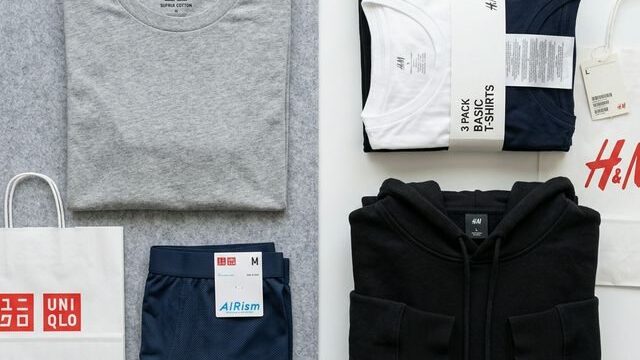
Uniqlo and H&M represent two very different approaches to affordable men’s clothing. Both sell basics at low prices — but the quality, philosophy, and longevity of their products differ significantly. Here’s everything you need to know.
If Uniqlo is your pick, the wider basics field is mapped in our stores like Uniqlo guide.
The Short Answer
Uniqlo offers higher-quality basics that last longer, using innovative fabrics like Supima cotton and HEATTECH. H&M is cheaper upfront but quality varies — great for throwaway trend pieces, but less durable for everyday essentials. For basics, Uniqlo wins on cost-per-wear.
Side-by-Side Comparison
| Feature | Uniqlo | H&M |
|---|---|---|
| Founded | 1984 (Japan) | 1947 (Sweden) |
| Philosophy | “LifeWear” — simple, quality essentials | Fast-fashion trend variety |
| T-Shirt Price | ~$10–$20 | ~$5–$15 |
| Materials | Supima cotton, HEATTECH, AIRism | Cotton, polyester, viscose |
| Quality | Consistent, durable | Variable (basics good, trends weaker) |
| Fit | True to size, clean Japanese cuts | Variable, relaxed fits |
| Sizing | Standard (XS–XXL) | Extended (up to 4XL) |
| Durability | 2–5 years for basics | 6–18 months for trend pieces |
| Innovation | HEATTECH, AIRism, UV Protection | H&M Conscious line |
Quality and Materials
Uniqlo is genuinely impressive for its price point. Their Supima cotton T-shirts use long-staple fibers that resist pilling and maintain shape through dozens of wash cycles. HEATTECH keeps you warm without bulk. AIRism is genuinely revolutionary for underwear and undershirts — it wicks moisture and stays cool in ways that $50+ activewear brands struggle to match.
H&M uses more budget-friendly materials — more polyester, thinner cotton, and synthetic blends. Their very best basics (plain crew tees, jersey boxers) are decent, but most items are designed for a season or two, not years. You’ll notice pilling, stretching, and color fading faster than with Uniqlo equivalents.
Best Items From Each Brand
Buy From Uniqlo
- Supima Cotton T-Shirts — the best $15 tee on the market
- AIRism Underwear — game-changer for comfort
- HEATTECH Thermals — invisible winter layering
- Ultra Light Down — packable, warm, and inexpensive
- Selvedge Denim — quality raw denim at a fraction of the usual price
Buy From H&M
- Plain Crew-Neck Tees (multi-packs) — unbeatable value for gym/layering
- Slim-Fit Chinos — solid beater pants for the price
- Basic Hoodies — good enough for casual wear
- Trend Pieces — try a style without committing money to it
- Socks and Accessories — genuinely good at H&M’s prices
Which Should You Choose?
Choose Uniqlo if:
- You want basics that last years, not months
- You value innovative fabrics (HEATTECH, AIRism)
- You prefer clean, minimal aesthetics
- You’re building a capsule wardrobe
Choose H&M if:
- You need the lowest possible upfront cost
- You want to experiment with trends without financial commitment
- You need extended sizing (3XL–4XL)
- You want variety and frequent new arrivals
Frequently Asked Questions
Is Uniqlo better quality than H&M?
For basics, yes — significantly. Uniqlo uses better materials (Supima cotton, innovative synthetic fabrics) and stricter quality control (100% product inspections). H&M basics are decent but less durable over time.
Is Uniqlo more expensive than H&M?
Slightly. A Uniqlo T-shirt might cost $15 vs $8 at H&M. But Uniqlo’s items typically last 3–5x longer, making them cheaper per wear over their lifetime.
Can you combine Uniqlo and H&M in one wardrobe?
Absolutely — this is actually the smartest strategy. Buy your core basics (T-shirts, underwear, thermals) from Uniqlo for longevity, and use H&M for trendy, seasonal pieces you don’t mind replacing.

Axel Lander is the founder and editor of ReadySleek. He publishes practical guides on men’s style, grooming, and fragrance, with a focus on clear comparisons, value, and the trade-offs readers should know before deciding.