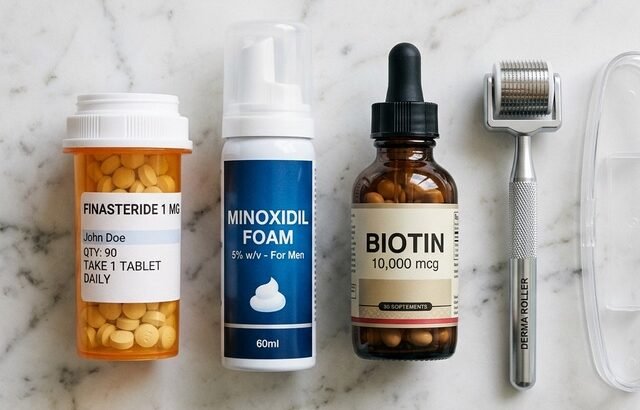

Hair Loss at 20: Why It Happens and What to Do About It (2026)
Losing hair in your 20s feels like it shouldn’t be happening. But it’s far more common than you think – approximately 20% of men experience noticeable hair loss by age …

Losing hair in your 20s feels like it shouldn’t be happening. But it’s far more common than you think – approximately 20% of men experience noticeable hair loss by age …

Microneedling has gone from a niche dermatology procedure to one of the most promising hair loss guide treatments available. Studies show that combining microneedling with minoxidil produces 4x more hair …

When it comes to hair loss, “natural” and “effective” rarely overlap. The internet is full of essential oil miracle cures, onion juice protocols, and scalp massage claims – most with …

“Does wearing a hat cause baldness?” It’s one of the most persistent grooming myths – and it’s believed by millions of men who avoid wearing hats out of fear. The …

Finasteride and minoxidil are the two FDA-approved treatments for male pattern baldness – and they work through completely different mechanisms. One blocks the hormone that causes hair loss; the other …

DHT (dihydrotestosterone) is the hormone directly responsible for male pattern baldness. It’s converted from testosterone by the enzyme 5-alpha reductase, and in men with genetic susceptibility, it miniaturizes hair follicles …

The hair growth product market is flooded with options ranging from FDA-approved medications to essential oil blends with zero clinical evidence. Separating what actually works from what doesn’t can save …

If you’ve ever searched “creatine hair loss” after starting a supplement routine, you’re not alone. It’s one of the most Googled fitness supplement concerns – and the fear has kept …

A hair transplant is the only permanent solution for male pattern baldness. Unlike minoxidil and finasteride – which require lifelong use – transplanted hair follicles grow for the rest of …

Finasteride is the most effective single medication for male pattern baldness. Originally developed to treat enlarged prostates (at 5 mg), the lower 1 mg dose (marketed as Propecia) was FDA-approved …