
There is no honest “best hair clay” for every head of hair. If your hair is fine to medium and you want flexible texture, Reuzel Clay Matte Pomade is the most sensible starting point in this comparison. If you need a firmer hold for thick or stubborn hair, compare Hanz de Fuko Claymation, Baxter Clay Pomade, and Arcadian Clay Pomade. The important catch: brands do not use a common scale for words such as strong, matte, or easy washout.
We did not pretend to wear-test five products that we did not use side by side. Instead, we checked current US manufacturer pages on August 26, 2026, normalized the listed size and price, and separated documented facts from our buying interpretation. That makes this a practical shortlist, not a lab ranking.
Five Hair Clays Compared
| Product | Maker-stated hold and finish | US list price* | Price per oz* | Best reason to shortlist it |
|---|---|---|---|---|
| Reuzel Clay Matte Pomade | Medium/flexible; 1/10 shine | $20.95 / 3.38 oz | $6.20 | Lowest normalized cost here; maker specifically positions it for fine to medium hair |
| Arcadian Clay Pomade | High hold; matte | $26 / 4 oz | $6.50 | High-hold claim with a large jar and water-rinse claim |
| American Crew Matte Clay | High hold; current copy says medium shine | $23 / 3 oz | $7.67 | Worth comparing when some visible finish is acceptable |
| Baxter Clay Pomade | Strong, pliable; matte | $24 / 2 oz | $12.00 | Maker positions it for straight, thick, and wavy hair and structured styles |
| Hanz de Fuko Claymation | High hold; semi-matte | $28 / 2 oz | $14.00 | Compact high-hold clay-wax option for straight, wavy, and thick hair |
What the normalized price shows: the cheapest and most expensive products in this five-item snapshot are only $7.05 apart by sticker price, but the cost per ounce differs by more than 2.2 times. That does not make the larger jar automatically better—the amount you need per style may differ—but it is a more useful value check than comparing jar prices alone.
Which Hair Clay Fits Your Use Case?
For Fine to Medium Hair: Reuzel Clay Matte Pomade
Reuzel gives the most specific fit guidance of the five brands: its product page calls the clay lightweight, rates hold at 6/10 and shine at 1/10, and identifies fine to medium hair as the intended range. That is a better reason to shortlist it than the generic claim that every clay is ideal for thin hair.
Choose it when flexible texture matters more than maximum control. Skip it as your first choice if dense or stubborn hair normally overwhelms medium-hold products; Reuzel itself points those users toward stronger products in its range.
For High Hold at a Lower Cost per Ounce: Arcadian Clay Pomade
Arcadian’s current listing describes a creamy clay with high hold, high texture, a matte finish, restylability, and water washout. At $6.50 per ounce for the standard four-ounce jar, it is the strongest on-paper value proposition in this group if you want more than medium hold.
That conclusion is based on the specification and price, not a durability test. The ingredient list also includes several aromatic oils, so read it before buying if fragrance is a concern.
For Strong, Pliable Control: Baxter Clay Pomade
Baxter describes its two-ounce clay pomade as strong but pliable, with no-shine texture, and positions it for straight, thick, and wavy hair. It also gives a useful application distinction: damp or wet hair creates a wetter-looking result, while dry-hair application looks more natural.
Its ingredient list starts with petrolatum and beeswax before bentonite and kaolin. Do not assume that every product with “clay” in the name behaves like a light water-based paste. If easy washout is your top criterion, choose a product whose maker explicitly makes that claim.
For a Compact Premium Clay-Wax: Hanz de Fuko Claymation
Claymation is documented as a high-hold, semi-matte, water-soluble clay-wax hybrid for straight, wavy, and thick hair. It is also the most expensive option here after normalizing the current list price to $14 per ounce.
Shortlist it if that specific combination—high hold, pliability, compact jar, and a finish that is not promised to be completely flat—is what you want. The brand name alone is not enough reason to pay more than twice Reuzel’s price per ounce.
If “Matte” Does Not Need to Mean Zero Shine: American Crew Matte Clay
American Crew’s current US page is a good example of why the label is not the specification. The product is named Matte Clay, while the live description calls it high hold with medium shine. Treat that as a reason to expect some visible finish—or verify the packaging and current formula before ordering—not as proof that one line of copy must be right.
At $7.67 per ounce, its current list-price position is closer to Reuzel and Arcadian than to Baxter or Claymation. It can make sense for short to medium styles when workable control matters more than a dead-matte result.
How to Choose Without Believing the Front Label
- Choose the finish first. “Matte” can mean zero shine, low shine, or even medium shine depending on the brand. Read the detailed description.
- Match hold to your hair and style. Fine hair can collapse under too much dense product; thick hair may need more grip. A loose crop and a tall pompadour do not need the same control.
- Check the base and washout claim. Clay is an ingredient or texture category, not a guarantee that the whole formula is water-based.
- Compare cost per ounce. Divide the current price by net ounces, then consider how much product you realistically use.
- Start with the smallest useful amount. A strong clay becomes expensive and heavy when you apply twice as much as necessary.
If you are still deciding between product categories, start with our pomade vs wax vs clay vs gel guide. For technique rather than shopping, see how to choose and apply hair clay and our short-hair application guide.
How to Apply Hair Clay Without Flattening Your Hair
- Start with a pea-sized amount. You can add product; removing too much usually means washing your hair.
- Warm it thoroughly between your palms until there are no visible clumps.
- Apply from the back toward the front so the heaviest deposit does not land on your fringe.
- Use dry hair for more grip and a flatter finish; use slightly damp hair when the maker recommends it and you want easier distribution.
- Build in small layers. Stop as soon as the style holds.
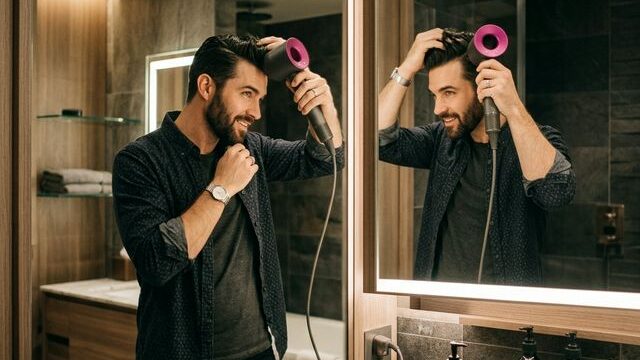
For volume, the blow-dry often does more of the structural work than the clay. Dry the roots in the direction you want before adding product. Clay then supplies separation and control instead of trying to lift wet, flat hair by itself.
Three Claims We Would Not Use to Rank These Products
- “Best overall.” That requires a defined test across different hair types and styles, not a familiar product name.
- “Makes thin hair thicker.” Styling clay can create temporary texture and make hair look fuller. It does not increase the number or diameter of hair strands.
- “Lasts all day.” Hold depends on amount, hair length and density, pre-styling, humidity, activity, and formula. A manufacturer claim is not the same as our own timed wear test.
How We Researched This Shortlist
We compared the five manufacturers’ US product pages on August 26, 2026. We recorded the standard jar size, list price, stated hold, stated finish, stated hair-type guidance, washout wording, and ingredient information where useful. We then calculated price per ounce to make differently sized jars comparable. Retailer discounts, tax, delivery, customer-review averages, and unsupported durability claims were excluded.
This method answers a narrower but more reliable question: which products deserve a place on your shortlist based on documented specifications and current value? A true performance winner would require controlled side-by-side use on multiple hair types. We have not made that claim.
Frequently Asked Questions
Is hair clay better than pomade?
Clay is usually the better direction for separated texture and low shine. Pomade is usually easier to choose for a smooth, combed style or obvious shine, though clay pomades blur the categories. Our pomade vs clay comparison explains the tradeoff in more detail.
Does all hair clay wash out with water?
No. The word “clay” does not tell you the complete base. Reuzel, Arcadian, and Hanz de Fuko explicitly describe easy rinse-out or water solubility for the products above; Baxter’s formula begins with petrolatum and beeswax. Follow the exact product’s directions.
Should you put clay on wet or dry hair?
Use dry hair when you want more grip, separation, and a more matte result. Slightly damp hair can make a dense product easier to distribute and usually softens the hold. Check the maker’s directions because formulas differ.

Axel Lander is the founder and editor of ReadySleek. He publishes practical guides on men’s style, grooming, and fragrance, with a focus on clear comparisons, value, and the trade-offs readers should know before deciding.