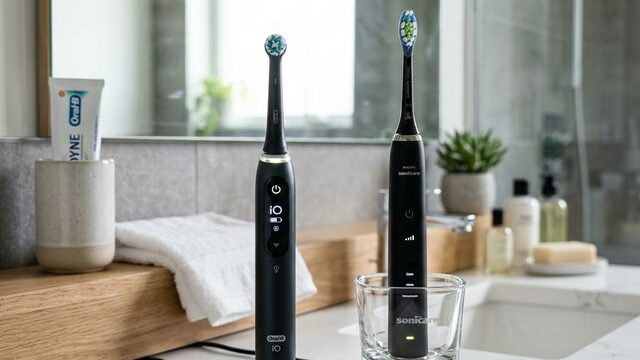
An electric toothbrush is the single biggest upgrade you can make to your oral care routine. Studies consistently show they remove 21% more plaque than manual brushing. The built-in timer ensures you brush the full 2 minutes. Pressure sensors prevent overbrushing. Here’s the breakdown of the best electric toothbrushes for men in 2025.
Best Electric Toothbrushes: Top Picks
| Product | Price | Type | Battery | Best For |
|---|---|---|---|---|
| Oral-B iO Series 9 | ~$300 | Oscillating | 14 days | Best overall — AI tracking, 7 modes, premium feel |
| Philips Sonicare 4100 | ~$50 | Sonic | 14 days | Best value — excellent cleaning at entry price |
| Oral-B Pro 1000 | ~$50 | Oscillating | 7 days | Best budget oscillating — proven technology |
| Philips Sonicare DiamondClean | ~$180 | Sonic | 14 days | Best premium sonic — sleek design, 5 modes |
| Quip Smart | ~$45 | Sonic | 3 months (AAA) | Best for travel — slim, subscription model |
| Oral-B iO Series 4 | ~$100 | Oscillating | 10 days | Best mid-range — iO technology at lower price |
Sonic vs Oscillating: Which Is Better?
| Factor | Sonic (Sonicare) | Oscillating (Oral-B) |
|---|---|---|
| Action | Vibrates side-to-side at 31,000+ strokes/min | Rotates + oscillates at 8,800 movements/min |
| Cleaning | Broader sweep, fluid dynamics clean beyond bristles | Precise, cup-shaped head wraps around each tooth |
| Sensitivity | Gentler on gums and enamel | More aggressive — better with pressure sensor |
| Feel | Buzzing vibration (quieter) | Rotating/pulsing (more tactile) |
| Studies | Both effective; slight edge for gum health | Both effective; slight edge for plaque removal |
The honest answer: Both are significantly better than manual brushing. The difference between sonic and oscillating is marginal compared to the difference between electric and manual. Choose based on feel preference — try both if possible.
What Features Actually Matter
2-minute timer (essential): Every electric toothbrush should have this. If yours doesn’t, upgrade. Pressure sensor (very useful): Warns you when brushing too hard. Prevents gum recession and enamel damage. Multiple modes (nice to have): Sensitive, deep clean, whitening modes are useful but not essential. Most people stick to one mode. Smart features/app (unnecessary): Bluetooth connectivity and AI tracking are fun but don’t improve cleaning. The basic brush does the actual work. Brush head compatibility (practical): Oral-B and Sonicare both have wide brush head ecosystems. Replacement heads cost $5-10 each; replace every 3 months.
Frequently Asked Questions
How often should I replace the brush head?
Every 3 months, or sooner if bristles are frayed. Some brush heads have indicator bristles that fade when it’s time to replace. Using a worn brush head negates the advantage of electric brushing — the bristles can’t make proper contact with tooth surfaces.
Is a $300 electric toothbrush worth it over a $50 one?
For cleaning ability alone, no. A $50 Oral-B Pro 1000 or Sonicare 4100 removes plaque just as effectively as a $300 model. The premium models add convenience features (smart pressure sensors, more modes, longer battery, premium materials) but the core cleaning performance is nearly identical. Start with a $50 model and upgrade later if you want the premium features.
Related Articles

Axel Lander is the founder and editor of ReadySleek. He publishes practical guides on men’s style, grooming, and fragrance, with a focus on clear comparisons, value, and the trade-offs readers should know before deciding.