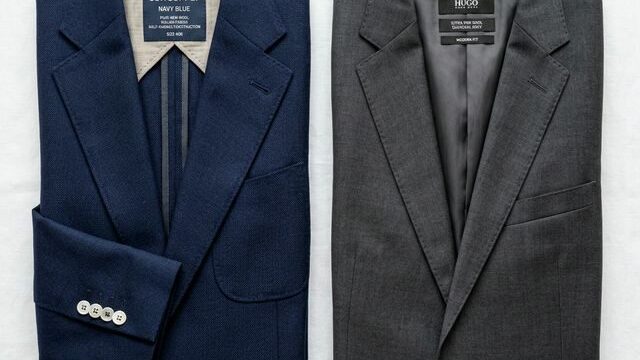
SuitSupply and Hugo Boss are two of the most popular brands for men buying mid-range suits. One is a Dutch disruptor that revolutionized affordable tailoring; the other is a German institution with 100+ years of history. Here’s how they compare for men who need a suit.
A price bracket below both sits the smart-casual segment – mapped in our stores like Banana Republic guide.
The Short Answer
SuitSupply offers objectively better suit quality for the money — superior fabrics (Vitale Barberis Canonico, Loro Piana), half-canvas construction, and modern slim fits at $400–$700. Hugo Boss offers brand recognition, wider availability, and a more corporate aesthetic at $600–$1,200. SuitSupply for quality-per-dollar; Boss for brand prestige and convenience.
Full Comparison
| Feature | SuitSupply | Hugo Boss |
|---|---|---|
| Founded | 2000 (Amsterdam) | 1924 (Germany) |
| Suit Price Range | ~$399–$1,500 | ~$600–$1,500 |
| Sweet Spot | ~$500–$700 | ~$700–$1,000 |
| Construction | Half-canvas (standard from $399) | Fused (most models), half-canvas (premium) |
| Fabric Sources | VBC, Loro Piana, E. Thomas | In-house and Italian mills |
| Fit Options | Lazio (slim), Havana (relaxed), Sienna (modern) | Slim, Regular, Relaxed |
| In-Store Tailoring | Yes (free alterations on new purchases) | Limited (varies by location) |
| Shirt Price | ~$79–$149 | ~$128–$228 |
| Availability | ~130 stores, strong online | ~1,100 stores worldwide |
| Brand Recognition | Growing (known to fashion/menswear community) | Very high (mainstream global) |
Construction Quality
SuitSupply delivers half-canvas construction starting from their $399 base suit — something Hugo Boss doesn’t offer until their premium $1,000+ range. Half-canvas means the chest piece is stitched in (not glued), creating a better drape, molding to your body over time, and lasting longer. At $500–$700, SuitSupply’s fabric quality (Italian mills like VBC) competes with suits costing $1,200+ from established brands.
Hugo Boss primarily uses fused construction (glued chest piece) in their standard $600–$800 range. Fused suits look good initially but can develop bubbling over time and don’t drape as naturally. Boss’s premium lines use better construction, but you’re paying significantly more for comparable quality.
Style and Fit
SuitSupply’s fits are more modern and fashion-forward. The Lazio (their most popular) has a clean, contemporary slim silhouette with natural shoulders. Their range of fits and in-store styling advice makes finding the right suit easy — plus free alterations ensure a perfect fit.
Hugo Boss offers a more conservative, corporate aesthetic. Their suits are well-made for the boardroom but can feel less exciting stylistically. Boss has the advantage of massive brand recognition — wearing Boss communicates “professional” in a way that SuitSupply (a younger brand) is still building.
Which Should You Buy?
Choose SuitSupply if: You want the best suit quality for $400–$700. You value construction quality (half-canvas) over brand name. You want modern, fashion-forward fits. You appreciate Italian and European fabrics at accessible prices.
Choose Hugo Boss if: Brand recognition matters for your professional environment. You want wider availability and easy purchasing. You prefer a more conservative, corporate aesthetic. You value the security of a well-known, established brand.
Frequently Asked Questions
Is SuitSupply better quality than Hugo Boss?
At comparable prices, yes. A $500 SuitSupply suit (half-canvas, Italian fabric) outperforms a $700–$800 Hugo Boss suit (fused construction) in construction quality and fabric. Boss’s premium lines bridge this gap, but at higher prices.
Are Hugo Boss suits worth the price?
For the brand recognition and convenience, yes — especially if you shop during sales. For pure quality-per-dollar, SuitSupply, Charles Tyrwhitt, and Spier & Mackay all deliver better construction at lower prices. Boss’s value is strongest in their shirt and accessories categories.

Axel Lander is the founder and editor of ReadySleek. He publishes practical guides on men’s style, grooming, and fragrance, with a focus on clear comparisons, value, and the trade-offs readers should know before deciding.